


What Happens If a Treadmill Test Is Positive?
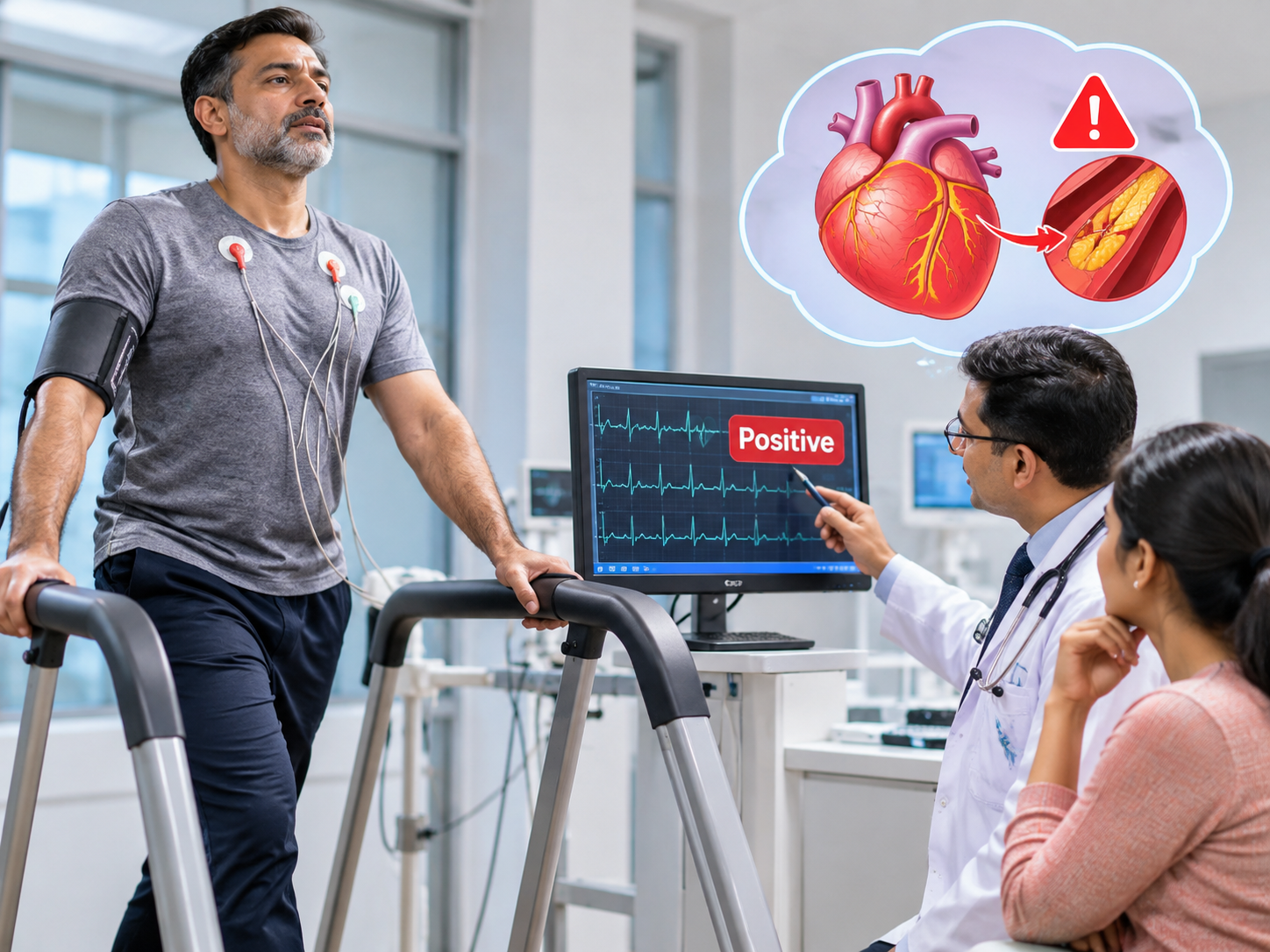
A treadmill test is commonly recommended when a doctor wants to understand how the heart responds to physical activity. It is also known as a TMT, exercise stress test, or treadmill ECG test. During the examination, the patient's heart rate, blood pressure, and electrical activity are monitored while they walk on a treadmill that gradually becomes faster or steeper.
But what happens if the treadmill test is positive? Does it mean there is a blockage in the heart? Is it dangerous? Will the patient need another test?
A positive result can indicate that the heart may not be receiving enough blood during physical activity. However, it does not confirm a heart blockage on its own. The result needs to be assessed by a qualified doctor, who may recommend further investigations depending on the patient's symptoms and medical history.
If you are looking for a treadmill test in Sirmour, this guide explains what a positive result means, what doctors may recommend next, and why proper interpretation is important.
What Is a Treadmill Test (TMT)?
A treadmill test is a non-invasive cardiac investigation used to assess how the heart responds when the body is physically active.
During exercise, the heart needs more oxygen and must pump more blood. A treadmill test helps doctors observe whether the heart's electrical activity and other monitored measurements change as the workload increases.
The test usually involves:
-
Placing ECG electrodes on the patient's chest.
-
Recording the resting heart rate and blood pressure.
-
Asking the patient to walk on a treadmill.
-
Gradually increasing the treadmill's speed and incline.
-
Monitoring ECG changes, heart rhythm, blood pressure, and symptoms.
-
Checking the patient's recovery after exercise.
The test is performed under medical supervision. The patient can stop if they feel uncomfortable, and the medical team may stop it if concerning symptoms or changes appear.
Doctors may recommend a TMT when investigating possible coronary artery disease, exercise-related chest discomfort, breathlessness, or certain heart rhythm concerns.
What Does a Positive Treadmill Test Mean?
A positive treadmill test generally means that the ECG has shown changes during exercise that may suggest reduced blood supply to the heart muscle. These changes can indicate possible myocardial ischaemia, a condition in which the heart muscle does not receive enough oxygen-rich blood.
One finding doctors may examine is a change in the ST segment of the ECG during exercise or recovery.
However, a positive result is not the same as a confirmed diagnosis of coronary artery blockage.
The doctor considers several factors before deciding what the result means, including:
-
The type and extent of ECG changes.
-
The patient's age and medical history.
-
Whether chest pain or breathlessness occurred.
-
The exercise level achieved.
-
Changes in heart rate and blood pressure.
-
Existing risk factors such as diabetes, high blood pressure, smoking, and high cholesterol.
Some positive results may need further investigation, while others may be considered less concerning after a complete clinical assessment.
Does a Positive TMT Mean There Is a Heart Blockage?
Not necessarily.
A positive TMT can raise suspicion of reduced blood flow in the coronary arteries, which supply blood to the heart muscle. However, the test does not directly show the arteries or identify the exact location and percentage of a blockage.
There are also situations in which a treadmill test may show abnormal ECG changes even when significant coronary artery disease is not present. These are known as false-positive results.
The accuracy of a TMT depends on several factors, including the patient's medical condition, baseline ECG, ability to exercise, and the overall clinical context.
For this reason, doctors do not usually make important treatment decisions based only on the words "positive TMT" without reviewing the full report and other relevant information.
What Happens After a Positive Treadmill Test?
The next step depends on the patient's symptoms, risk factors, and the details of the test. A doctor may recommend further assessment to understand whether the findings indicate coronary artery disease or another condition.
1. Consultation With a Cardiologist
The first step is usually to discuss the report with the treating doctor or a cardiologist.
The doctor may ask about:
-
Chest pain or pressure during activity.
-
Breathlessness while walking or climbing stairs.
-
Dizziness or fainting.
-
Previous heart problems.
-
Family history of heart disease.
-
Diabetes, high blood pressure, and cholesterol levels.
-
Smoking and other lifestyle factors.
The doctor will also review the complete TMT report rather than relying only on its positive or negative label.
2. Echocardiography
An echocardiogram, commonly called an ECHO, uses ultrasound waves to create images of the heart.
It helps assess the heart's structure, pumping function, valves, and movement of the heart walls.
In some cases, a doctor may recommend a stress echocardiogram, which combines exercise or medication-induced stress with ultrasound imaging. This can provide additional information about how the heart muscle functions under stress.
3. Stress Imaging
Depending on the clinical situation, a doctor may recommend stress imaging rather than relying on a standard treadmill ECG alone.
Options may include:
-
Stress echocardiography.
-
Nuclear myocardial perfusion imaging.
-
Other imaging-based cardiac assessments.
These tests can provide additional information about blood flow or heart muscle function during stress.
4. CT Coronary Angiography
CT coronary angiography uses CT imaging and contrast material to examine the coronary arteries.
It can help doctors assess whether plaque or narrowing is present in the arteries supplying the heart.
It may be considered in selected patients after reviewing the initial test results and clinical risk.
5. Invasive Coronary Angiography
In some cases, a cardiologist may recommend invasive coronary angiography.
This procedure involves introducing a thin catheter into a blood vessel and using contrast material and X-ray imaging to examine the coronary arteries.
It may be recommended when the patient's symptoms, risk assessment, or other test findings suggest that a more detailed examination is necessary. If a significant narrowing is found, the cardiologist will discuss appropriate treatment options.
Not everyone with a positive TMT needs coronary angiography. The decision depends on the overall clinical assessment.
Can a Treadmill Test Be False Positive?
Yes. A treadmill test can sometimes show ECG changes that suggest reduced blood flow even when significant coronary artery disease is not present.
Several factors can influence the interpretation, including:
-
Certain baseline ECG abnormalities.
-
Some medications.
-
Blood pressure-related changes.
-
Differences in the patient's exercise capacity.
-
Other medical or physiological factors.
A positive result should therefore be interpreted in context.
Similarly, a negative treadmill test does not completely rule out coronary artery disease. If symptoms continue or become worse, the doctor may recommend further testing even after a result that appears normal.
Is a Positive TMT Dangerous?
A positive result should be taken seriously, but it does not automatically mean that a heart attack is happening.
It is a finding that may require further medical assessment. The level of concern depends on the ECG changes, symptoms, exercise capacity, and other clinical details.
Patients should follow their doctor's advice and avoid starting strenuous exercise or intense workouts until they have received appropriate medical guidance.
Seek emergency medical attention if you experience chest pressure or pain that is severe, persistent, or occurs with breathlessness, sweating, fainting, nausea, or pain spreading to the arm, jaw, back, or shoulder. Do not wait for another test or routine appointment if these symptoms occur.
What Is the Difference Between TMT, Treadmill ECG and Cardiac Stress Test?
These terms are often used to describe the same general examination.
| Term | Meaning |
|---|---|
| TMT | Treadmill Test |
| Treadmill ECG Test | ECG monitoring while exercising on a treadmill |
| Exercise Stress Test | Test that evaluates the heart during physical activity |
| Cardiac Stress Test | A broader term that can include exercise-based or medication-based stress testing |
A standard treadmill ECG test monitors the heart's electrical activity during exercise. A stress echocardiogram or nuclear stress test includes additional imaging.
Your doctor will recommend the type of examination that best suits your symptoms and medical condition.
Where Can You Get a TMT Test Near Sirmour?
Patients looking for a TMT Test in Sirmour should check whether the diagnostic facility has the required equipment, trained staff, and appropriate medical supervision.
Before booking, consider these points:
-
Confirm that the centre performs a standard exercise treadmill ECG test.
-
Ask whether a doctor or qualified medical professional supervises the procedure.
-
Check how heart rate, ECG, and blood pressure are monitored.
-
Ask when the report will be available.
-
Carry previous ECGs and relevant medical records.
-
Follow the preparation instructions given by the centre.
If a suitable appointment is not available nearby, patients may consider facilities in Solan or other accessible towns.
When searching for a Treadmill Test Near Sirmour, remember that the quality of monitoring and medical interpretation is more important than choosing a centre based only on distance or price.
Apex Diagnostics Center for TMT Testing in Solan
Apex Diagnostics Center, located near Netaji Park, Hospital Road, Solan, provides TMT services according to its official website.
The centre describes the treadmill test as an exercise-based investigation that helps doctors assess how the heart responds to physical activity. During the test, heart rate, blood pressure, breathing, ECG changes, and the patient's response to exercise are monitored.
Patients looking for a TMT Test Center in Sirmour or a Treadmill ECG Test in Sirmour may also enquire about appointment availability at Apex Diagnostics Center in Solan, depending on their travel convenience.
Before booking, patients should confirm:
-
Whether a TMT appointment is available.
-
Any preparation or medication instructions.
-
Whether a doctor's prescription is required.
-
The reporting time and charges.
-
Whether the facility is suitable for their current medical condition.
Apex Diagnostics Center can be contacted through its published appointment numbers:
-
Address: Near Netaji Park, Hospital Road, Solan, Himachal Pradesh.
-
Appointment: +91 8894781112–13.
-
Emergency: +91 8894781114.
Patients with active chest pain, severe breathlessness, or other emergency symptoms should seek hospital emergency care rather than travelling to a diagnostic centre for a routine treadmill test.
How Should You Prepare for a Treadmill Test?
Preparation instructions may differ according to the patient's health and the doctor's advice.
Some general points include:
-
Wear comfortable clothes and suitable walking shoes.
-
Carry your doctor's prescription and previous ECG reports.
-
Tell the medical team about existing heart conditions and other illnesses.
-
Ask whether you should avoid food, caffeine, or smoking before the test.
-
Discuss all medicines with your doctor before the appointment.
-
Do not stop heart or blood pressure medicines unless your doctor specifically instructs you to do so.
If you have difficulty walking, balance problems, or a condition that limits physical activity, inform your doctor before the test. Another type of stress assessment may be more appropriate.
Frequently Asked Questions (FAQs)
1. What happens if a treadmill test is positive?
A positive result may indicate ECG changes suggesting reduced blood flow to the heart during exercise. Your doctor will review the complete report and may recommend further tests, such as an echocardiogram, stress imaging, or CT coronary angiography.
2. Does a positive TMT mean a heart attack?
No. A positive TMT does not automatically mean that a heart attack is occurring. It suggests that further assessment may be needed to investigate possible heart-related problems.
3. Can a positive treadmill test be wrong?
Yes. False-positive results can occur. ECG changes may appear during exercise even when significant coronary artery disease is not present. A doctor must interpret the result along with symptoms and medical history.
4. What test is done after a positive TMT?
The next investigation depends on the patient's condition. A doctor may recommend an echocardiogram, stress imaging, CT coronary angiography, or invasive coronary angiography in selected cases.
5. Can I exercise after a positive TMT?
Do not begin strenuous exercise or intense workouts until your doctor has reviewed the result and advised you about safe activity levels. The recommendation depends on the findings and your symptoms.
6. Where can I get a treadmill test near Sirmour?
You can enquire at diagnostic centres and hospitals in and around Sirmour. Apex Diagnostics Center in Solan also lists TMT services on its official website. Confirm appointment availability and suitability before visiting.
Conclusion
A positive treadmill test can be an important finding because it may suggest that the heart is not receiving enough blood during physical activity. However, it does not confirm a heart blockage or automatically mean that a heart attack is occurring.
The right next step is to consult a qualified doctor or cardiologist, review the complete report, and undergo further investigations if recommended.
If you are searching for a treadmill test in Sirmour, a Cardiac Stress Test in Sirmour, or a nearby TMT facility, check the centre's monitoring arrangements, professional supervision, and reporting process before booking.
Apex Diagnostics Center in Solan lists TMT among its diagnostic services and provides information about the exercise stress test on its official website. Contact the centre directly to confirm current availability and appointment details.
Disclaimer: This article is for general educational purposes and is not a substitute for medical advice. A positive or negative TMT result must be interpreted by a qualified healthcare professional. Seek emergency medical care for severe or persistent chest pain, breathlessness, fainting, or other possible heart attack symptoms.
 Russian
 English
 Arabic
 French
 Spanish
 Portuguese
 Deutsch
 Turkish
 Dutch
 Italiano
 Romaian
 Portuguese (Brazil)
 Greek