


Which Bed Linen Helps Guests Sleep Cooler in a Hot Climate?
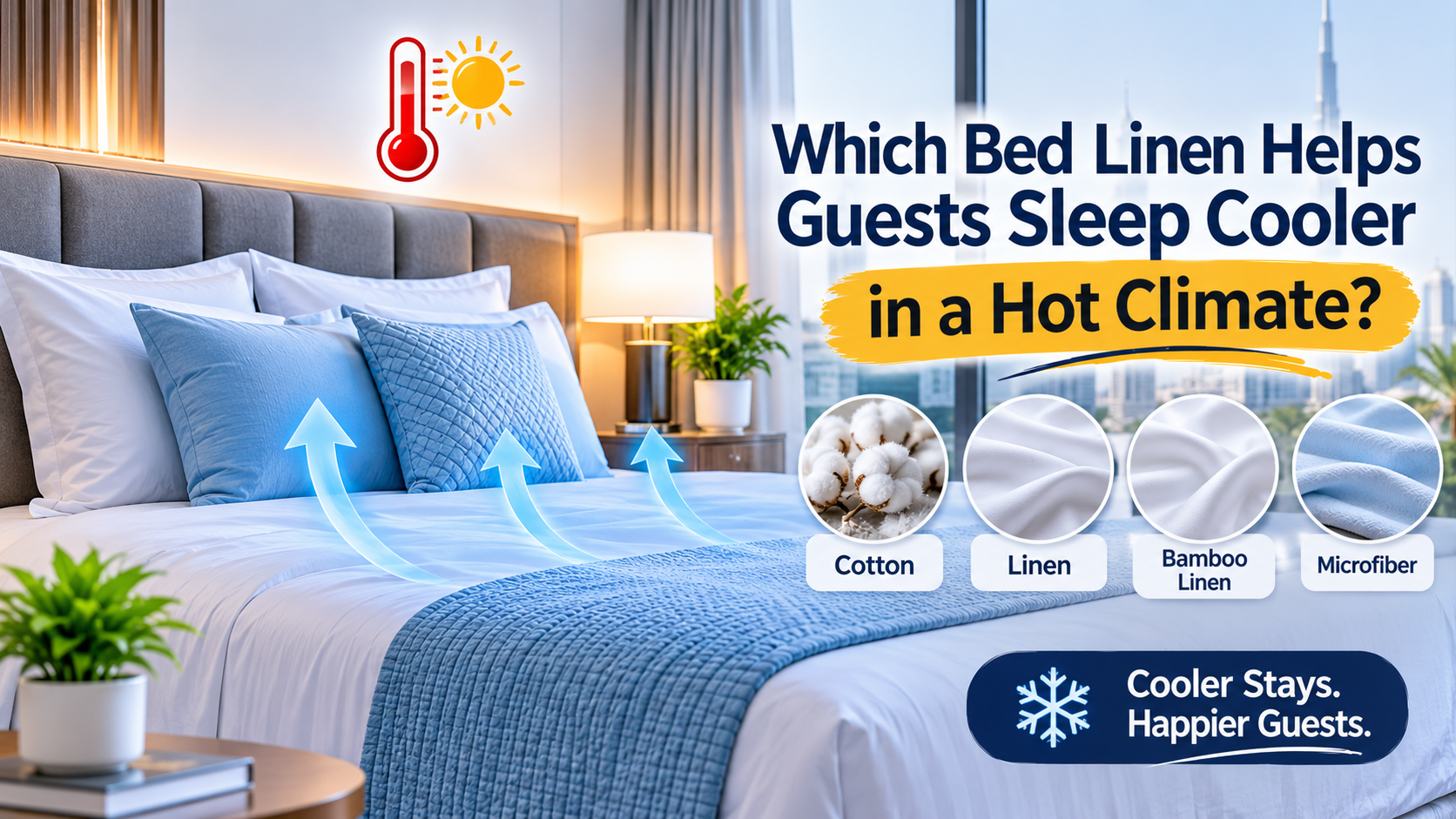
Guests in a warm region often arrive from hot streets into air-conditioned rooms, and comfort at night depends on more than the thermostat. The fabric against the skin, the weight of the cover, and the way the bed holds heat all shape whether a guest feels too warm or comfortable. Hotels researching cooling bed linen want products that feel fresh and breathable without costing more or complicating laundry. This guide explains what actually affects how warm a bed feels, how common fabrics and weaves compare, and how to choose bed linen for hot-climate rooms. Personal comfort varies from guest to guest, so the aim is to improve the odds of comfort, not to promise a result.
What Makes a Bed Feel Warm or Cool
Several factors combine:
- Fiber type, since some fibers breathe and move moisture better than others
- Weave and thread density, which affect airflow
- Fabric weight, since heavier fabric holds more heat
- Finish, because smooth or glossy surfaces feel different from matte ones
- Layers, including mattress protector, topper, sheet, and cover
- Room conditions, such as air-conditioning settings and humidity
Linen is only one part of this, but it is the part guests touch directly.
Fibers and Breathability
Cotton is widely used because it is breathable and absorbs moisture. Lighter, well-made cotton often feels fresh against the skin.
Linen (flax) is known for its airy, textured feel and for drying quickly. It wrinkles easily and can feel coarse at first, so it suits some brands better than others.
Fibers made from wood pulp, such as lyocell, are often marketed as smooth and moisture-managing. Properties and care needs vary by product, so check the supplier's information and test samples.
Polyester is durable and easy to care for, but it can feel warmer and less breathable than natural fibers, depending on the weave. Blends vary.
Real performance depends on quality and construction as well as fiber, so test samples.
Weave and Finish
Percale uses a simple over-under weave and has a crisp, matte, airy feel, which many guests find cool.
Sateen floats threads on the surface to create a smoother, slightly glossy feel. It can feel warmer and silkier than percale.
Waffle and open weaves create small pockets that increase airflow and feel textured, often used for blankets and bathrobes.
Thread count matters less than people expect. A moderate thread count in a well-made fabric can feel cooler than a very dense, heavy one. Weight is also worth checking, since a lighter fabric is generally less insulating.
Bed Covers and Layers
Heavy duvets can trap heat, even in air-conditioned rooms. Many hotels provide a lighter cover or a lighter duvet insert, with an extra blanket available on request, so guests can adjust. Mattress protectors and toppers also influence heat, since some have waterproof or foam layers that hold warmth. Choose breathable options and test them on a real bed. When ordering wholesale bed linen, consider the whole stack, not only the sheet.
Match Fabric to Operations
Cooling fabrics must still work in the laundry. Check:
- Wash-cycle durability and shrinkage
- Wrinkle behavior and finishing needs
- Colorfastness
- Drying time
- Cost per use
Linen and some lyocell fabrics may need more careful laundering and finishing, which affects staff time. Cotton percale is widely used in hotels because it combines a cool feel with solid durability. Whatever you choose, test it in your own process.
Pillowcases and Surface Contact
Guests' heads and necks rest on the pillowcase for hours, so its fabric matters as much as the sheet. A smooth, breathable cotton pillowcase often feels fresher than a heavy or synthetic one. Check that pillowcases match the sheets in fabric family so the bed feels consistent, and that sizes fit the pillows in use.
Guest Choice
Because comfort is personal, offering choice helps. Options include a lighter and a heavier cover, different pillow types, and an extra blanket or a cooling-style pillow if the property offers one. Clear in-room notes, or a simple request process, let guests adjust. Staff should be ready to respond quickly.
Test Before You Commit
Ask for full-size samples. Put them on a real bed with the actual mattress, protector, and cover. Have several staff members and, if possible, a few volunteers try them. Compare feel when the room is at normal temperature. Wash samples several times and check how they hold up. Record feedback in a simple table so the decision does not rely on one person's taste.
Do Not Overclaim
Avoid promising health or sleep benefits in marketing. Describe the product factually, such as the fabric, weave, and weight, and let guests judge comfort. If a supplier makes cooling claims, ask what they are based on and whether there is any test information. Treat vague wording with caution.
Frequently Asked Questions
1. Is cotton percale a good choice for hot climates? Many hotels use it because it is breathable, crisp, and durable. Individual comfort varies, so test samples.
2. Does a higher thread count make sheets cooler? Not necessarily. Very dense fabric can feel heavier, and a moderate thread count in a well-made fabric often feels fresher.
3. Is polyester bedding always too warm? Not always, since weave and construction matter, but polyester can feel warmer and less breathable than cotton in many cases.
4. Do duvets and toppers affect how warm a bed feels? Yes. Heavy covers, foam toppers, and waterproof protectors can hold heat, so consider the whole stack.
5. How can a hotel let guests adjust their bedding warmth? Provide a lighter cover with an extra blanket on request, or a choice of pillows, and make requests easy.
6. Should hotels advertise their bedding as cooling? Describe the fabric, weave, and weight factually and avoid unproven claims. Ask suppliers what any cooling claim is based on.
Final Thoughts
Guests are more likely to sleep comfortably when bedding is breathable, appropriately weighted, and adjustable. Choosing a moderate-weight cotton or similar fabric, considering the whole layer stack, testing samples on real beds, and offering guests some choice improves the odds of comfort without making unproven promises. Checking laundry compatibility and cost per use keeps the choice practical.
 Dutch
 English
 Arabic
 French
 Spanish
 Portuguese
 Deutsch
 Turkish
 Italiano
 Russian
 Romaian
 Portuguese (Brazil)
 Greek