


Lowering Energy Bills With a High-Efficiency Water Heater Replacement
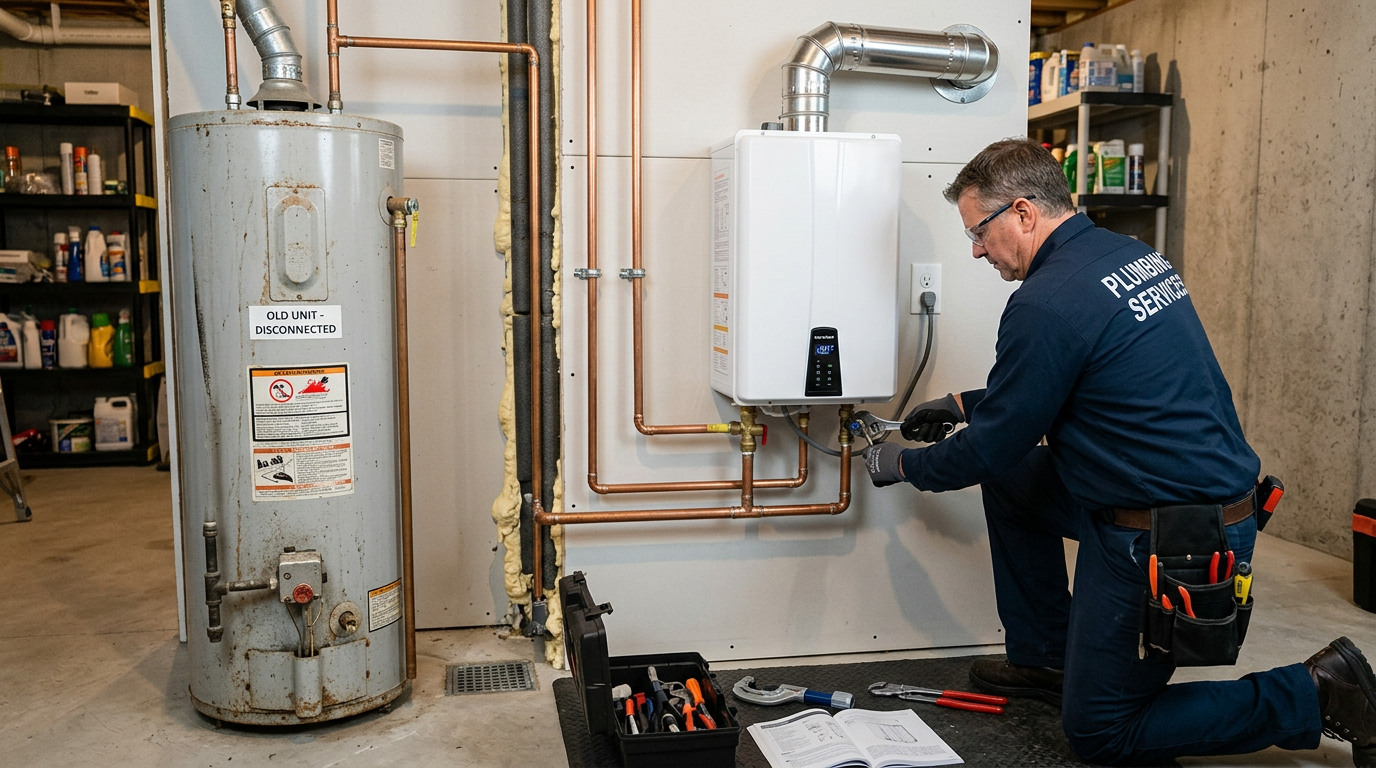
Heating water takes a surprising amount of energy. Showers, laundry, dishwashers, and kitchen sinks all draw from the same unit, day after day. In many homes, the water heater ranks among the largest energy users after heating and cooling. When that unit is old or inefficient, you pay for it every month.
If your current water heater is aging, a replacement is a good chance to cut those costs. Newer models waste less heat, use smarter controls, and in some cases use entirely different technology. Choosing a high-efficiency water heater replacement can lower utility bills for years while giving your household a more reliable hot water supply.
This article explains where older water heaters waste energy, which high-efficiency options are available, and how to compare them. It also covers how installation, sizing, and maintenance affect savings, so your water heater replacement pays off the way you expect.
Where older water heaters waste energy
Understanding the sources of waste helps explain why newer units save money.
Standby heat loss is the biggest one for tank water heaters. A tank keeps water hot all day and night. Heat slowly escapes through the tank walls and pipes, so the unit has to keep firing to make up the difference, even when no one is using hot water.
Sediment buildup reduces efficiency over time. Minerals settle at the bottom of the tank and form a layer between the burner or element and the water. The unit has to run longer to heat the same amount of water.
Poor insulation in older tanks lets more heat escape. Many older units were built to less strict efficiency standards than today's models.
Worn components, such as aging thermostats or burners, can cause the unit to run more than needed.
Oversized or undersized units also waste energy. A tank that's too large keeps extra water hot for no reason. One that's too small may run constantly to keep up.
How water heater efficiency is measured
Water heaters carry an efficiency rating called the Uniform Energy Factor, or UEF. The higher the number, the more efficiently the unit turns energy into hot water. Comparing UEF ratings is one of the easiest ways to judge how much a new model might save compared to your current one.
Keep in mind that UEF ratings compare units within the same category. A heat pump water heater and a gas tank heater use different fuel and technology, so comparing their operating costs means looking at local energy prices too.
High-efficiency options to consider
Several types of water heaters offer better efficiency than a standard older tank.
High-efficiency tank water heaters improve on traditional designs with better insulation, improved burners, and more efficient heat transfer. Some gas models use condensing technology to capture heat from exhaust gases that would otherwise go up the vent. These units are a good choice when you want efficiency gains without changing how your system works.
Tankless water heaters heat water only on demand, which removes standby heat loss. Gas condensing tankless models are especially efficient. Electric tankless units can work well in smaller homes or as point-of-use heaters.
Heat pump water heaters are among the most efficient options for electric homes. They move heat from the surrounding air into the water instead of generating it directly. Compared with a standard electric tank, they can use far less electricity to produce the same amount of hot water.
Choosing the right high-efficiency water heater replacement
The most efficient unit on paper isn't always the best value for your home. Consider these factors:
- Your fuel source, whether natural gas, propane, or electricity, and local rates for each
- How much hot water your household uses and when demand peaks
- Space available for the new unit and any venting or drainage it needs
- Water quality, since hard water and well water affect long-term efficiency
- Upfront cost compared to expected savings over the unit's lifespan
- Any rebates or incentives available in your area for efficient models
A technician can review these details with you and estimate how different options compare for your specific situation.
Sizing matters for savings
An efficient unit that's the wrong size won't deliver the savings you expect.
For tank and heat pump units, capacity is measured in gallons and first-hour rating, which tells you how much hot water the unit can deliver in a busy hour. For tankless units, the key number is flow rate in gallons per minute at a given temperature rise.
A professional will look at the number of people in your home, bathrooms, appliances, and usage habits to size the unit correctly. Correct sizing means you get enough hot water without paying to heat more than you need.
Installation affects efficiency
How a water heater is installed has a direct effect on how efficiently it runs.
Gas units need proper venting and gas line sizing. A poorly vented unit may not burn fuel efficiently and can create safety risks. Heat pump units need enough surrounding air and a working condensate drain. Tankless units need correct gas or electrical supply and proper water connections.
Insulating hot water pipes, especially those running through unheated spaces, reduces heat loss between the water heater and your fixtures. Setting the thermostat to a reasonable temperature, often around 120 degrees Fahrenheit for many households, avoids wasting energy on water hotter than you need.
Maintenance protects your savings
High-efficiency water heaters still need care. Without it, efficiency drops over time.
Tank units benefit from regular flushing to clear sediment and from periodic anode rod checks. Tankless units need descaling to remove mineral buildup from the heat exchanger. Heat pump units need their air filters cleaned and condensate drains checked.
Homes on well water should pay special attention. Higher mineral content means sediment and scale build up faster. Water treatment, such as a softener or sediment filter, can protect the new unit and help it keep its efficiency longer.
Signs your current water heater is costing you money
You may already be paying more than you need to. Watch for these signs:
- Rising energy bills without other changes in your household
- Hot water running out faster than it used to
- The unit running more often or for longer periods
- Popping or rumbling noises that point to sediment buildup
- A tank that's 10 to 15 years old or more
- Frequent repairs
If several of these apply, replacing the unit may save more over time than continuing to repair it.
Small habits that add to the savings
A new unit does most of the work, but daily habits help too. Low-flow showerheads and faucet aerators cut the amount of hot water each use requires. Running the dishwasher and washing machine with full loads uses hot water more efficiently. Washing clothes in cold water when possible reduces demand further.
Fixing dripping hot water faucets matters more than it seems. A slow drip sends heated water down the drain all day, and the water heater has to replace it.
If your home has long pipe runs between the water heater and the farthest bathroom, ask about recirculation options or pipe insulation. Both reduce the time and energy spent waiting for hot water to arrive.
Vacation settings help too. Many newer units let you lower the temperature or switch to an energy-saving mode when you're away for several days, so you aren't paying to keep water hot in an empty house.
Timing your replacement
Waiting until a water heater fails means making a quick decision under pressure. You may end up with whatever is in stock instead of the best option for your home.
If your unit is aging, plan ahead. Get an assessment, compare options, and schedule installation at a convenient time. This approach gives you the best chance of choosing an efficient unit that fits your needs and budget.
Estimating your return
Savings vary based on the unit you choose, your fuel costs, and your usage. A heat pump water heater replacing an old electric tank will often show a large drop in electricity use. A high-efficiency gas tank replacing an older gas tank will show a smaller but steady improvement.
To estimate your return, compare the yearly operating cost of your current unit with the expected cost of the new one, then weigh the difference against the price gap between options. Most homeowners keep a water heater for a decade or more, so modest monthly savings add up.
Start saving on hot water
An old water heater can quietly add to your energy bills every month. Upgrading to an efficient model, sized and installed correctly, can lower those costs and give you more reliable hot water.
Tri-County Pump Service, Inc. installs high-efficiency tank, tankless, and heat pump water heaters for homes throughout Carroll, Frederick, Howard, Montgomery, and Washington counties in Maryland and nearby areas of Virginia and West Virginia. To find out which option could lower your bills, contact Tri-County Pump Service, Inc. to schedule an assessment.

 Arabic
 French
 Spanish
 Portuguese
 Deutsch
 Turkish
 Dutch
 Italiano
 Russian
 Romaian
 Portuguese (Brazil)
 Greek