


How Does Bearing Movement Affect Printing Press Performance?
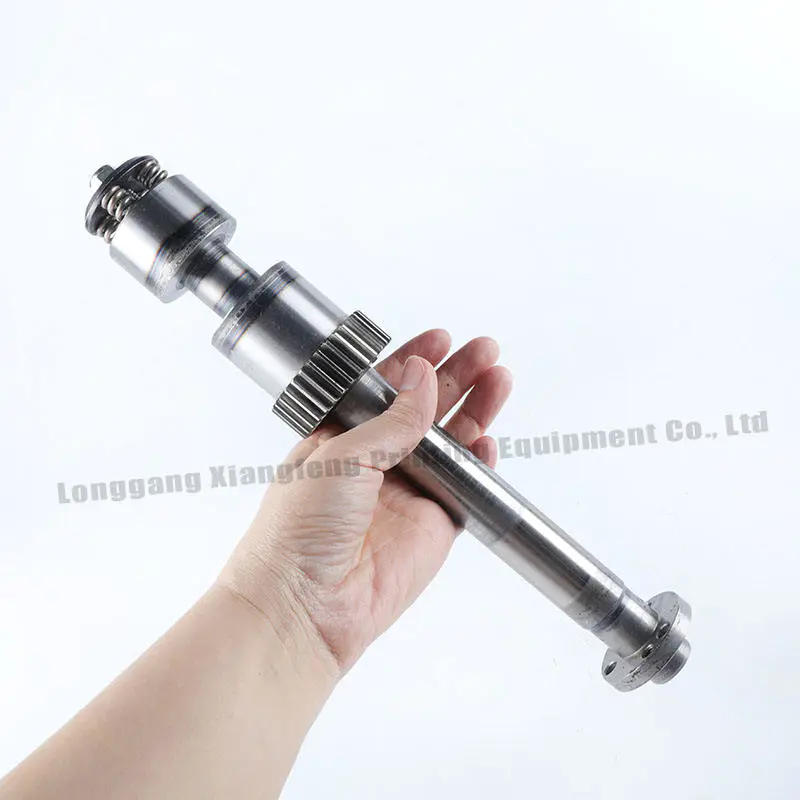
A Printing Machine Bearing can experience very different operating conditions depending on where it is installed. Bearings supporting cylinders and drive shafts usually work with continuous rotation. Others are fitted into feeder pivots, gripper mechanisms, swing arms, and similar components that repeatedly move through a limited angle. Although both types of applications involve movement, the contact conditions inside the bearing are not the same.
During continuous rotation, rolling elements travel around the raceway as the shaft turns. The loaded area therefore changes position throughout each revolution, allowing contact to spread across a larger portion of the raceway. This operating pattern is common in cylinder supports, roller ends, and drive shafts. Speed, applied load, alignment, temperature, and lubrication all influence bearing performance. A bearing that operates smoothly under steady rotation still needs suitable installation and maintenance conditions to achieve a reasonable service life.
Oscillating movement creates a different pattern. Instead of completing full revolutions, the bearing repeatedly moves through a short angular range before reversing direction. The rolling elements continue to pass over similar sections of the raceway, concentrating repeated contact in relatively small areas. Under certain conditions, this can contribute to localized wear or surface damage.
One example is false brinelling, which can develop when repeated small movements or vibration cause damage at the rolling contact areas. The resulting marks may resemble indentation damage, even though the bearing has not experienced the conditions associated with ordinary rotational operation. This is one reason that a bearing used in a gripper mechanism should not automatically be assessed in the same way as one supporting a continuously rotating cylinder.
Lubrication also deserves attention. In continuously rotating applications, movement helps distribute lubricant through the rolling contacts. With oscillating movement, grease may remain concentrated around a limited contact area, and lubricant circulation can be less effective. Grease selection, retention, operating cycles, and maintenance intervals should therefore reflect the actual working conditions rather than relying only on general recommendations for rotating equipment.
The printing environment introduces additional challenges. Paper dust, ink residue, cleaning agents, and vibration can affect bearing positions over time. Sealed bearings help retain lubricant and reduce the entry of contaminants, but their suitability depends on the application and the compatibility of the sealing material with the surrounding conditions. During inspection, technicians should pay attention to damaged seals, unusual noise, looseness, and signs of contamination.
When replacing a Printing Machine Bearing, matching the basic dimensions is only the starting point. Bore diameter, outside diameter, and width help identify a physically suitable part, but they do not establish whether it can handle the required load and movement. The installation position, load direction, speed or oscillation range, lubrication arrangement, and sealing requirements also need to be considered.
Different bearing types serve different purposes. Ball bearings are commonly used where their load capacity and operating characteristics suit the application. Roller bearings provide line contact and can support relatively high loads, while needle bearings can be useful where installation space is limited. The appropriate arrangement depends on the machine's construction and the demands placed on each position.
Maintenance records can make future replacements more consistent. Alongside the bearing number and dimensions, recording whether a position uses continuous rotation or oscillating movement gives technicians useful information when checking wear and selecting spare parts. Rotating positions may require attention to temperature, noise, and vibration, while oscillating positions may need closer inspection for localized surface marks, mechanical play, and looseness.
A Printing Machine Bearing is only one component within a much larger press, but its operating conditions can affect the accuracy and stability of connected mechanisms. Identifying how each bearing moves, rather than relying on dimensions alone, gives maintenance teams a clearer basis for inspection, replacement, and spare parts planning.
 French
 English
 Arabic
 Spanish
 Portuguese
 Deutsch
 Turkish
 Dutch
 Italiano
 Russian
 Romaian
 Portuguese (Brazil)
 Greek