


What Should You Know About Bunker Blast Valves?
An underground emergency operations centre is conducting a routine readiness drill when a simulated explosion is triggered near the facility. Within milliseconds, the bunker's ventilation protection system activates. The blast valves installed in the air intake ducts automatically close, preventing the shockwave from entering the shelter. Once the simulated threat ends, the valves reopen, restoring fresh air circulation without manual intervention. This sequence demonstrates why blast valves are considered one of the most critical components in modern bunker ventilation systems.
Whether designed for military, civil defence, or industrial applications, bunker ventilation must do more than supply fresh air—it must also protect occupants and equipment from the destructive effects of blast overpressure. Understanding how blast valves work is essential for anyone involved in designing or maintaining high-security infrastructure.
What are Blast Valves?
Blast valves are specialised mechanical safety devices that protect ventilation systems from explosion-induced pressure waves. Unlike conventional ventilation dampers, they are engineered to close automatically when exposed to sudden overpressure while allowing unrestricted airflow during normal operating conditions.
A Blast valve for bunker is installed on fresh air intake and exhaust ducts to isolate the ventilation system during a blast event. This prevents damaging pressure from entering protected spaces while preserving the structural integrity of the facility.
Today, blast valves are widely used in military bunkers, underground command centres, civil defence shelters, industrial plants, and other critical infrastructure where reliable explosion protection is required.
How Blast Valves Work Under Explosion Pressure
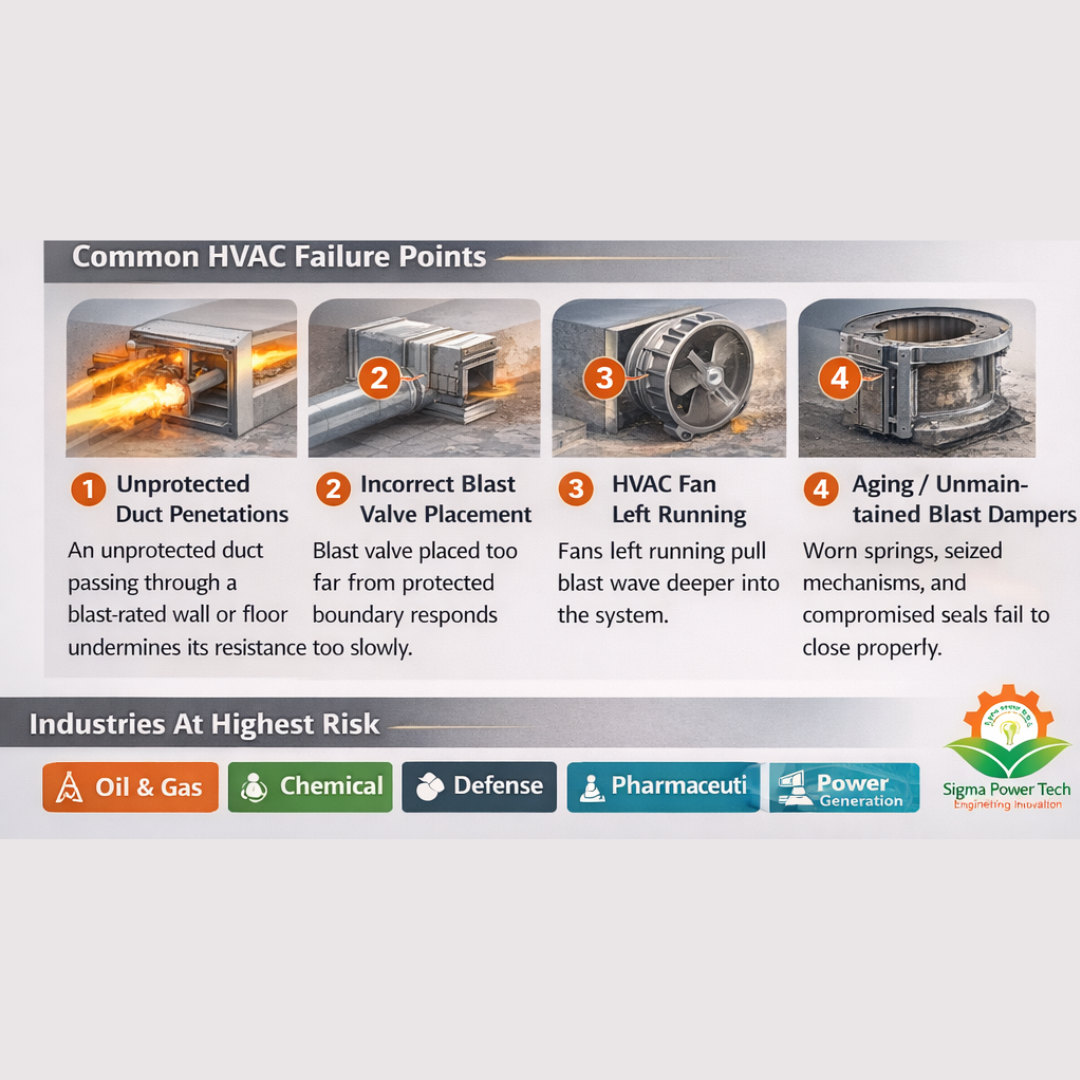
An explosion produces an intense shockwave that travels rapidly through the surrounding environment. Ventilation ducts can unintentionally become pathways for this pressure wave unless they are properly protected.
Blast valves are specifically designed to stop this from happening.
During normal operation, the valve remains open to support continuous ventilation. When blast pressure exceeds the valve's calibrated threshold, the internal mechanism closes almost instantly, blocking the shockwave before it reaches sensitive equipment or occupied areas. Once external pressure returns to safe levels, the valve automatically reopens.
Modern Blast valve HVAC systems integrate blast valves with filtration units, air handling equipment, and pressure control systems to ensure uninterrupted ventilation during normal operation while maintaining maximum protection during emergencies.
Key Features of Blast Valves
High-quality blast valves are designed to perform reliably in some of the world's most demanding environments.
Pressure Resistance
Blast valves are engineered to withstand high explosion overpressure without structural failure or permanent deformation.
Structural Strength
Heavy-duty steel construction provides excellent mechanical stability during severe blast events.
Corrosion Resistance
Protective coatings and corrosion-resistant materials extend service life in humid, coastal, and chemically aggressive environments.
Durability
Precision manufacturing ensures reliable long-term performance with minimal maintenance requirements.
Sealing Efficiency
High-performance sealing systems minimise leakage and preserve internal pressure integrity when the valve closes.
Airflow Management
During routine operation, blast valves allow efficient airflow with minimal pressure loss across the ventilation system.
Safety Performance
Automatic mechanical operation ensures rapid response even during electrical power failures, making the system highly dependable.
Where Blast Valves are Used
Although commonly associated with military shelters, blast valves are used across numerous industries where explosion protection is required.
Bunkers and Protective Shelters
A Blast valve for bunker protects underground shelters, emergency operation centres, and secure facilities from explosion pressure entering through ventilation systems.
Industrial Facilities
Chemical processing plants, refineries, explosive manufacturing facilities, and hazardous storage sites use blast valves to improve operational safety.
Defence Infrastructure
Military headquarters, aircraft shelters, ammunition depots, and strategic command facilities depend on blast-resistant ventilation systems to maintain mission readiness.
HVAC Systems
Properly engineered Blast valve HVAC installations provide reliable airflow while automatically isolating ventilation systems during blast incidents.
Power Plants
Energy generation facilities use blast protection systems to reduce operational risks and protect critical equipment.
Hazardous Environments
Facilities handling combustible gases, explosive dust, or volatile chemicals often incorporate blast valves as part of comprehensive explosion protection strategies.
Factors Affecting Blast Valve Price in India
The Blast valve price varies depending on the engineering requirements of each project. There is no universal specification suitable for every application.
Several factors influence pricing:
- Material quality, including stainless steel or carbon steel construction.
- Required pressure rating.
- Valve size and airflow capacity.
- Mechanical design complexity.
- Custom engineering requirements.
- Compliance with defence and industrial certification standards.
- Manufacturing precision and testing procedures.
- Installation environment and operational conditions.
Rather than focusing solely on initial cost, buyers should consider lifecycle performance, maintenance requirements, and long-term reliability when evaluating blast valve solutions.
How to Choose Blast Valve Manufacturers in India
Selecting the right manufacturer is essential because blast valves operate in environments where safety cannot be compromised.
Important evaluation criteria include:
- Proven experience in blast protection engineering.
- Compliance with recognised engineering and manufacturing standards.
- Product testing and documented performance validation.
- Capability to customise products for project-specific requirements.
- Technical consultation and after-sales engineering support.
- Consistent manufacturing quality.
- Long-term maintenance and spare parts availability.
Common Mistakes to Avoid
Proper specification is essential for achieving effective blast protection.
Choosing Based Only on Price
Selecting equipment solely according to Blast valve price may result in inadequate protection if the valve does not meet project requirements.
Ignoring Pressure Ratings
Every blast valve should be selected based on the expected explosion loads of the protected facility.
Poor HVAC Compatibility
Blast valves should integrate correctly with the complete ventilation system to ensure efficient airflow and dependable emergency operation.
Confusing Different Airflow Components
A Blast Gate is typically designed for airflow regulation or dust collection systems and should not be used as a substitute for a certified blast valve.
Likewise, a Blast damper may provide airflow isolation or fire protection but is not automatically designed to withstand explosion overpressure unless specifically engineered for blast-resistant applications.
Overlooking Maintenance
Routine inspection of moving components, seals, and operating mechanisms helps maintain reliable long-term performance.
Using Incorrect Specifications
Installing standard industrial dampers instead of purpose-built blast valves can significantly reduce protection in military and high-risk industrial facilities.
Understanding Similar Blast-Related Products
Not every product using the word "blast" serves the same function. For example, a Blast valve hot air balloon controls the rapid release of hot air during balloon descent. Although the terminology is similar, its design and operating principles are entirely different from the blast valves used in bunker ventilation and industrial safety systems.
Recognising these differences helps ensure that engineers select equipment designed specifically for explosion protection.
Conclusion
Blast valves are a vital component of safe bunker ventilation systems. By automatically blocking explosion-induced pressure waves while allowing efficient airflow during normal operation, they help protect occupants, critical equipment, and the structural integrity of high-security facilities.
Whether installed in military bunkers, industrial plants, defence infrastructure, hazardous environments, power stations, or critical HVAC systems, properly engineered blast valves significantly improve explosion resilience and operational reliability. Choosing high-quality, well-tested blast protection equipment is an investment in long-term safety, infrastructure performance, and business continuity when it matters most.
 Romaian
 English
 Arabic
 French
 Spanish
 Portuguese
 Deutsch
 Turkish
 Dutch
 Italiano
 Russian
 Portuguese (Brazil)
 Greek