


Teaching Kids Chess at Home: Setting Up a Space and Choosing Equipment
Teaching a child chess sounds harder than it is. You don’t need to be a strong player. You need patience, a sensible setup and a game that feels like fun rather than homework. Get the space and the equipment right, and half the battle is already won.
Start With the Right Height
Adults forget how awkward a grown-up table can be for a small person. If a child is perched on a tall chair with swinging legs, they’ll fidget, lose focus and want to be somewhere else within ten minutes.
Check that they can reach the board comfortably without stretching. A cushion on the seat or a footrest under the table can make a big difference, and both are cheap fixes.
Give the Game a Home
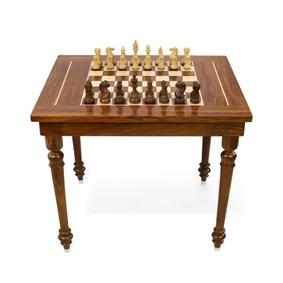
Children are far more likely to play when the board is out and waiting. A set packed in a cupboard needs a grown-up to rescue it, and that’s an extra hurdle. A small chess table in a family room turns chess into a standing invitation instead of an event.
If you don’t have the space, a board on a regular table works too. What matters is that it’s visible and easy to start.
Pieces Little Hands Can Handle
Very small pieces are fiddly for children, and very heavy ones can tip when they reach. Look for something in the middle, with a clear, recognisable shape for each piece.
Sterling Chess lists the Dal Rossi 95mm pieces with a storage box, which it describes as a practical, entry-level Staunton set. It also carries theme pieces, which can help a young player remember who’s who, since a character is easier to recall than a shape.
A Starter Kit Worth Considering
If you’d like everything in one box, Sterling Chess describes the DGT Chess Starter Box as a complete tournament-style starter set designed for schools, clubs and serious beginners. Families often find a simple kit like that takes the pressure off, because there’s nothing extra to hunt for.
Keep the First Games Short
Long games are tiring for adults, never mind a seven-year-old. Start with a handful of pieces and add more as they get comfortable. Teach one piece at a time, let them play with it freely, and only move on when they’re asking for more.
Don’t worry about perfect rules at the start. Fun comes first, and rules stick much better once a child wants to play.
Make It Playful
Stories work wonders. The knight jumps over walls. The pawns are brave little soldiers who can only march forward. Kids remember a story long after they forget a rule.
A few other ideas help too:
-
Let them choose which colour to play.
-
Celebrate good ideas, even when the move is a blunder.
-
Swap roles occasionally, so they get to teach you.
-
Stop while they’re still enjoying it.
That last one matters most. Ending on a high makes tomorrow’s game more likely.
Learning to Lose, and Win
Chess teaches children that losing isn’t the end of the world. It’s a tricky lesson, and some tears are normal. Stay calm, talk about what happened and point out one thing they did well.
When they win, celebrate, but gently. A child who learns to be a kind winner and a good loser has picked up something far bigger than chess.
Tidy-Up Is Part of the Game
Teach children to put the pieces away properly. It builds care for the equipment, and it means the next game starts without a search party. Sterling Chess sells storage cases among its accessories, so there’s an easy way to keep everything together.
Make it a ritual. Count the pieces back into the box together, and it becomes part of the fun instead of a chore.
When They Want More
Some children catch the bug fast. If yours starts asking for harder games or joins a school club, you could move up to a tournament chess set. Sterling Chess describes it as FIDE proportions: a weighted Staunton king between 95 and 105mm, squares of 50 to 55mm and spare queens in the box.
There’s no rush. Let their interest lead, and upgrade only when it feels right.
A Note on Patience
Some days a child will play for an hour and ask for more. Other days they’ll lose interest after three moves. Both are normal.
Buying With Peace of Mind
It’s reassuring that Sterling Chess offers free shipping on all orders and 100 day returns. That gives you time to see whether something suits your child before you’re committed. It’s also Australian owned and operated.
Final Thoughts
The best way to teach chess is to make it feel like a treat. Give them a comfortable spot, pieces they can handle and plenty of encouragement, and the rest tends to take care of itself.
 Portuguese
 English
 Arabic
 French
 Spanish
 Deutsch
 Turkish
 Dutch
 Italiano
 Russian
 Romaian
 Portuguese (Brazil)
 Greek