


What Happens Behind the Scenes After You Reserve a Bus Seat?
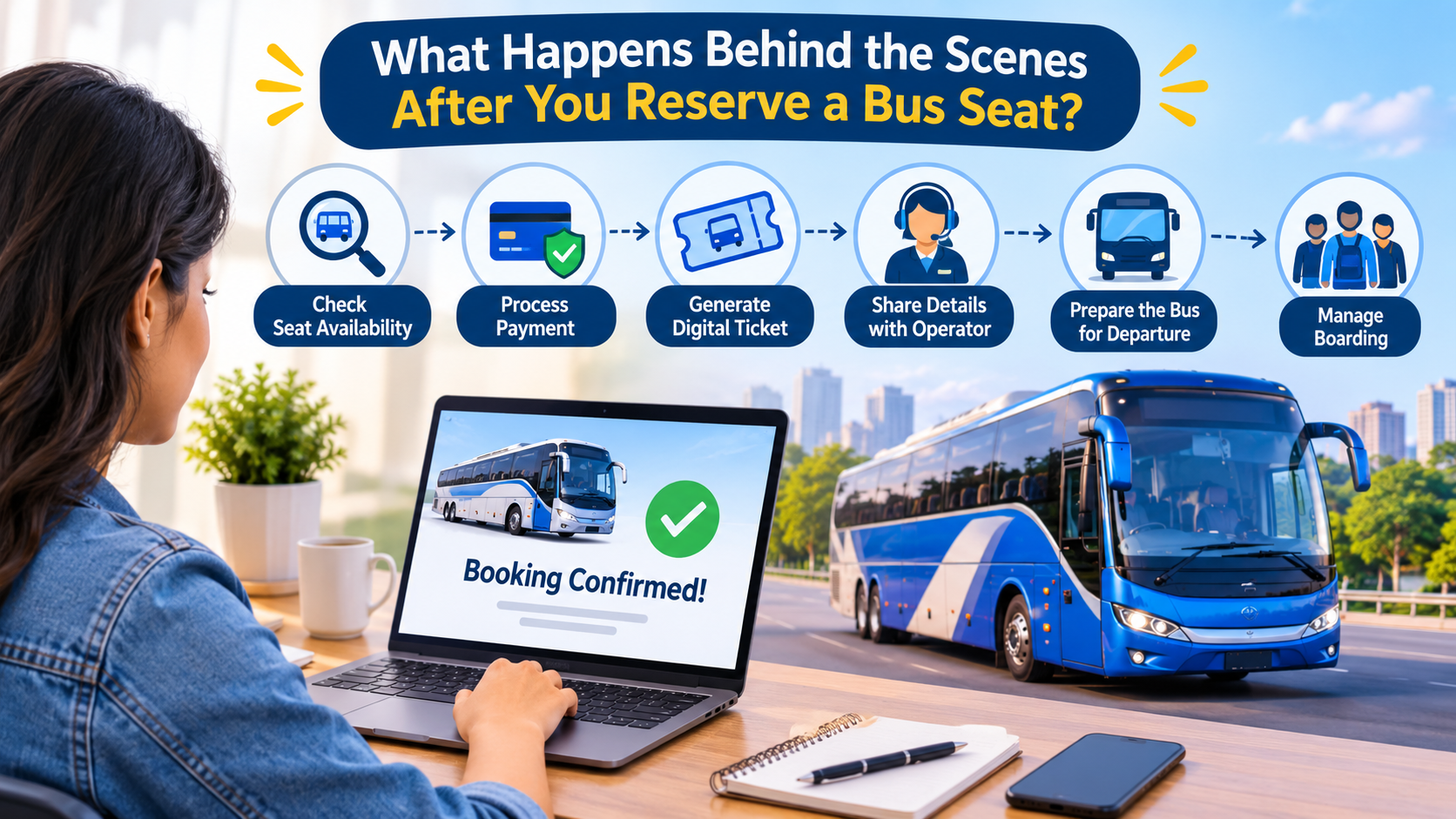
Booking a bus seat may take only a few minutes, but several activities happen behind the scenes before a passenger begins their journey. From checking seat availability and processing payments to confirming reservations and coordinating boarding arrangements, different systems and teams work together to manage the process. A smooth bus ticket booking experience depends on how efficiently these steps are handled, ensuring passengers receive the necessary information before departure.
1. Checking Seat Availability
The process starts when a passenger searches for a bus by entering the departure city, destination and travel date. The reservation system checks the available services and displays the seats that passengers can select.
Once someone chooses a seat, the system verifies its availability before proceeding with the reservation. This is important because other passengers may be looking at or attempting to reserve seats on the same service.
Passengers are generally asked to provide a few details, including:
-
Passenger name and contact information
-
Travel date and selected bus service
-
Preferred boarding and dropping points
-
Seat selection
-
Payment information
These details help the booking platform create an accurate reservation record.
2. Processing the Payment
After selecting a seat and entering the required information, the passenger moves to the payment stage.
Digital payment gateways handle transactions made through methods such as UPI, debit cards, credit cards and net banking. The payment system communicates with the booking platform to verify whether the transaction has been completed successfully.
Once the payment is confirmed, the reservation can move to the next stage. If a transaction fails or remains pending, the platform follows its payment and reservation policies to determine the next steps.
This process helps ensure that confirmed reservations are properly recorded.
3. Generating the Digital Ticket
After the reservation is confirmed, the passenger receives a digital ticket through the platform's available communication channel, usually SMS, email or a mobile application.
The ticket contains important information that passengers may need before and during their journey.
|
Ticket details |
Why they matter |
|
Booking reference number |
Helps identify the reservation |
|
Passenger name |
Confirms traveller information |
|
Bus operator details |
Identifies the service provider |
|
Journey date |
Shows the scheduled travel date |
|
Boarding point |
Specifies the pickup location |
|
Dropping point |
Shows the destination stop |
|
Seat number |
Identifies the allocated seat |
|
Departure details |
Provides scheduled departure information |
Passengers should review these details after receiving their tickets. Checking the boarding location and travel date in advance can help prevent confusion on the day of departure.
4. Sharing Passenger Details with the Bus Operator
Once the reservation is confirmed, relevant passenger and journey information is shared with the transport operator through the booking system.
This allows the operator to prepare for the scheduled departure and maintain records of expected passengers. The information may also help organise seat allocation and boarding at different pickup locations.
For example, a bus travelling between two cities may have several boarding points along its route. Knowing how many passengers are expected at each location helps the operator coordinate the boarding process more effectively.
Accurate passenger information also makes it easier to manage reservations and respond to queries when required.
5. Preparing the Bus for Departure
While passengers receive their booking confirmations, the transport operator prepares the vehicle for its upcoming journey.
Before departure, the bus generally goes through operational checks to ensure it is ready for service. These preparations may vary between operators but commonly include:
-
Checking the vehicle's general condition.
-
Inspecting important mechanical components.
-
Reviewing the seating arrangement.
-
Checking available passenger facilities.
-
Coordinating the driver's and staff's responsibilities.
For longer journeys, attention to onboard facilities is also important. Depending on the service, passengers may have access to features such as charging points, blankets, washrooms and comfortable seating arrangements.
These preparations help operators maintain consistency and provide a better travel experience.
6. Managing Passenger Boarding
When the departure moment nears, attention turns to the boarding of passengers.
Those travelling must arrive at their chosen pickup point at the reporting time required. Personnel may seek to verify the ticket or personal details of the passengers in order to allow them to board.
The information that passengers give while making a reservation enables them to find out their seats.
Coordination of passengers is important for buses with several pickup points. Personnel should ensure that passengers are boarding the right bus while obtaining their seats.
Having the customers’ ticket confirmation on hand makes it simpler for them at this stage.
7. How Technology Helps Manage the Journey
Technology has become an important part of modern bus transportation. Digital systems connect passengers, booking platforms and transport operators, making it easier to share information and coordinate different stages of a journey.
Some commonly used technologies include:
Digital reservation systems: These manage seat availability, passenger details and booking confirmations.
GPS-based tracking: GPS technology helps monitor vehicle movement and can provide passengers with updates about their bus journey.
Mobile applications: Passengers can access ticket details, journey information and other relevant services through mobile apps.
Digital notifications: SMS and app notifications help communicate important updates related to departure and travel arrangements.
Services such as IntrCity SmartBus use technology alongside passenger facilities to improve the intercity travel experience. Features such as live bus tracking allow passengers to stay informed about their bus's movement rather than relying entirely on manual updates.
8. What Happens When Travel Plans Change?
Sometimes passengers need to modify their plans after reserving a seat. They may want to cancel their ticket, change their travel date or request assistance with their boarding arrangements.
In such situations, the booking platform checks the applicable policies and available options.
|
Passenger requirement |
How it is generally handled |
|
Ticket cancellation |
Processed according to the cancellation policy |
|
Travel date change |
Depends on rescheduling availability and applicable conditions |
|
Boarding point change |
Subject to the operator's rules |
|
Refund request |
Reviewed according to refund eligibility |
|
Reservation assistance |
Handled through the platform's customer support |
The available options can differ depending on the bus operator and ticket conditions. Therefore, passengers should review the relevant policies before confirming any changes.
Why Understanding the Reservation Process Is Useful
Knowing what happens after reserving a bus seat helps passengers understand the different activities involved in organising a journey. It also explains why accurate information, timely confirmation and proper coordination are important for both travellers and transport operators.
A few simple practices can make the overall experience easier:
-
Check the journey date and passenger details after confirmation.
-
Save the digital ticket for easy access.
-
Verify the boarding and dropping locations.
-
Read the applicable cancellation and rescheduling conditions.
-
Reach the pickup point within the recommended reporting time.
These small steps can help passengers avoid common misunderstandings and prepare for their journey with greater confidence.
Conclusion
Making a reservation for a bus covers more than the act of choosing a seat and including the payment. Without the application of technology, information about passengers is collected and confirmations are sent via digital platforms, and transporters are responsible for vehicle arrangement and organization of boarding.
As technology evolves, processes become better organized and simpler. Learning how the reservation process works enables people to have clearer understanding of what happens after making a reservation and prepares them for a more successful intercity trip.
 Deutsch
 English
 Arabic
 French
 Spanish
 Portuguese
 Turkish
 Dutch
 Italiano
 Russian
 Romaian
 Portuguese (Brazil)
 Greek