


Planning Battery Range for a Medium-Duty Mobility Scooter
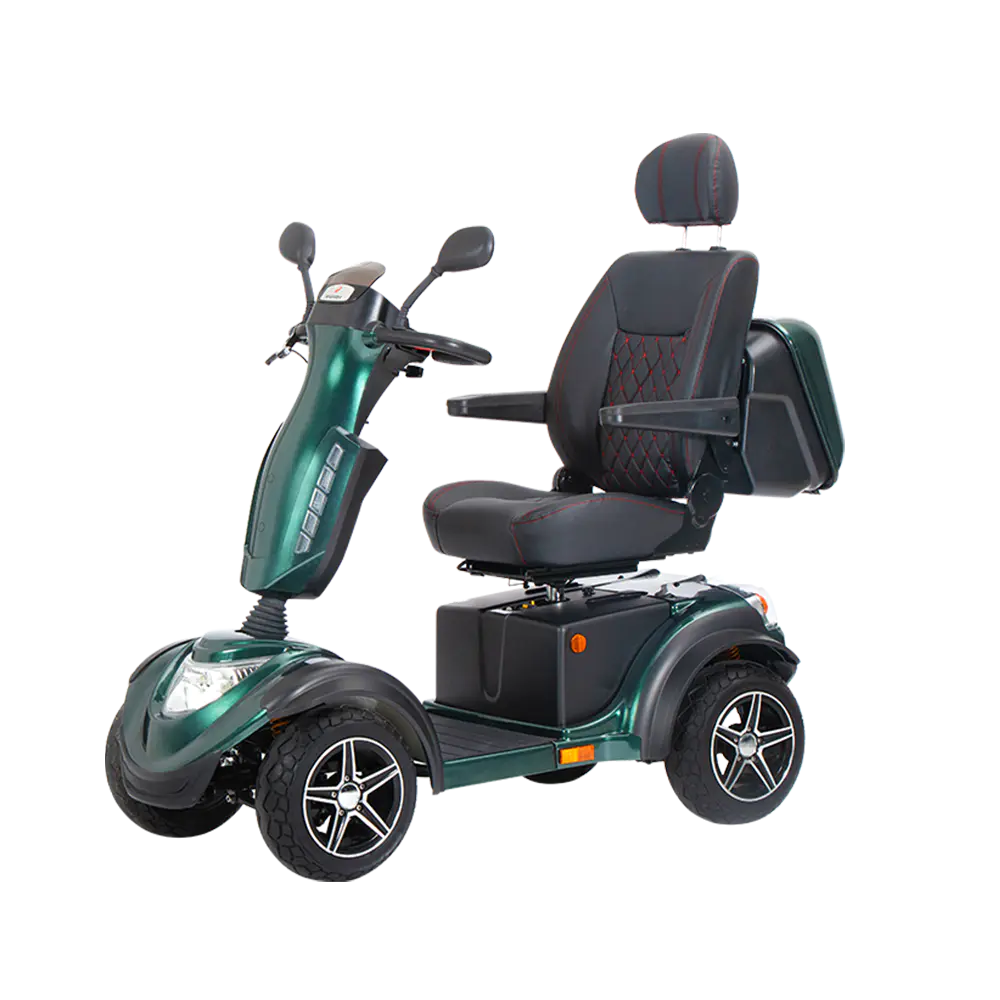
A Medium-Duty Mobility Scooter is commonly used for local errands, shopping trips, visits to parks and travel around residential areas. These journeys may combine smooth pavement, ramps, uneven paths and indoor floors. Unlike a short trip on level ground, a mixed route places different demands on the battery, motor and controller.
One important factor is the frequency of acceleration and braking. A scooter travelling at a steady speed on flat pavement generally uses energy differently from one that repeatedly stops at crossings, turns through shopping areas and starts again. Each acceleration requires the motor to draw power from the battery. On routes with frequent interruptions, actual range may therefore be shorter than a distance estimate based on continuous travel.
Terrain also changes energy consumption. Slopes and ramps require additional motor effort, particularly when the scooter carries a heavier load. Uneven pavement, gravel and cracked surfaces can increase rolling resistance, while repeated movement over small obstacles may place additional demands on the suspension and chassis. Riders who regularly travel through hilly neighborhoods should consider these conditions when estimating how far they can go on one charge.
Battery capacity is only one part of the planning process. A larger battery pack can provide more stored energy, but it also adds weight to the vehicle. The frame, suspension and overall design need to accommodate that additional mass. For a Medium-Duty Mobility Scooter, the aim is to balance travel range with manageable dimensions and stable handling. This is particularly relevant when the scooter needs to move between outdoor paths and indoor spaces such as shops or community buildings.
The motor and controller also influence how efficiently the stored energy is used. A motor designed for steady torque can provide controlled movement when climbing moderate ramps or carrying a regular load. The controller manages power delivery and speed response, helping the scooter accelerate and maintain movement according to the selected setting. Smooth acceleration can make everyday travel more comfortable and reduce unnecessary changes in power demand.
Rider habits are another part of battery planning. Travelling continuously at a higher speed, carrying shopping bags, frequently changing direction and using the scooter on rough surfaces can all affect energy consumption. Keeping the tires properly inflated, where applicable, and avoiding unnecessary loads can help maintain efficient operation. Charging routines also matter. Following the battery manufacturer's instructions and avoiding prolonged storage in a discharged condition can help maintain battery performance.
A practical way to estimate real-world range is to observe several ordinary journeys rather than relying on a single test. Recording the route distance, terrain, approximate load and remaining battery level provides a clearer picture of daily energy use. This information can help determine whether the existing capacity is suitable or whether a different configuration would better match the rider's routine.
Ultimately, a Medium-Duty Mobility Scooter should be evaluated according to the journeys it needs to support. Battery capacity, terrain, motor response, rider weight and charging habits work together to determine practical travel distance. Considering these factors gives a more realistic understanding of range and helps make everyday mobility more predictable.
 Russian
 English
 Arabic
 French
 Spanish
 Portuguese
 Deutsch
 Turkish
 Dutch
 Italiano
 Romaian
 Portuguese (Brazil)
 Greek