


Scooter Poncho Raincoat Design for Better Riding Coverage
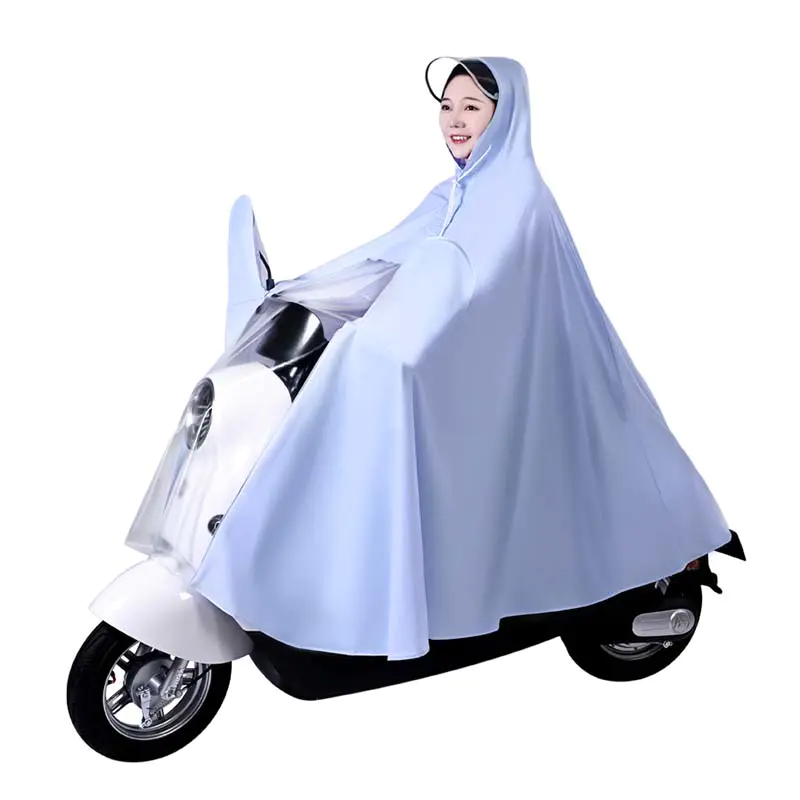
A Scooter Poncho Raincoat is designed around the rider's position rather than simply hanging over the shoulders like an ordinary walking poncho. Its front panel needs enough length to cover the upper body and handlebar area, while the sides and hem should provide coverage without interfering with steering or movement. A loose design may catch the wind, but one that is too narrow can leave the arms and legs exposed.
The hood is one of the first details worth examining. It should provide coverage around the head without restricting the rider's ability to look left and right. A brim can help keep rain away from the face, particularly when water runs down from the hood during a shower. If the brim uses transparent material, its clarity and position matter. It should not create an obstruction in the rider's normal field of vision, and it needs to remain stable rather than folding unpredictably in the wind.
Mirror access is another feature that distinguishes scooter rainwear from general-purpose ponchos. Rearview mirrors need to remain visible and usable while the rider is wearing the garment. Openings positioned around the mirrors can prevent the fabric from covering them, but their placement must suit the scooter's handlebar arrangement. If an opening is too small or positioned incorrectly, the fabric may pull against the mirror or leave gaps where rain can enter. The surrounding material should also be finished carefully to reduce the risk of tearing during repeated use.
The lower edge deserves attention as well. A longer hem can provide more coverage against rain and road splash, but excessive length may interfere with the wheels or moving parts. The front and side panels should hang naturally when the rider is seated or standing in the normal riding position. This is particularly important because the garment may shift as the rider turns the handlebars or changes posture.
Material thickness influences how the poncho behaves outdoors. A heavier film may help the garment maintain its shape, while a lighter material can be easier to fold and carry. Neither option is automatically suitable for every situation. The material needs to balance flexibility, coverage and resistance to ordinary handling. Seams and joined panels also require attention because these areas experience repeated movement and may be exposed to water pressure during rain.
Fit is not determined by body measurements alone. Handlebar width, mirror height, scooter dimensions and the rider's usual clothing all affect how the poncho sits. A design intended for a compact scooter may not cover a wider model in the same way. Trying the garment over the actual scooter can reveal problems that are difficult to identify from a flat pattern, such as a hem that sits too close to the front wheel or mirror openings that do not align properly.
Storage is another practical consideration. A Scooter Poncho Raincoat should be easy to fold and keep within reach when the weather changes unexpectedly. After use, allowing it to dry before storage helps prevent moisture from remaining trapped in folded sections. Dirt around the hem and transparent brim should also be cleaned gently so that the material remains comfortable to handle and the rider's view is not affected.
A Scooter Poncho Raincoat works best when coverage and freedom of movement are considered together. The brim, mirror openings, front panel and hem may appear to be small construction details, but each affects how the garment performs during an actual ride. Looking at these features as one complete design makes it easier to understand the difference between an ordinary rain poncho and one intended for scooter use.
 Romaian
 English
 Arabic
 French
 Spanish
 Portuguese
 Deutsch
 Turkish
 Dutch
 Italiano
 Russian
 Portuguese (Brazil)
 Greek