


Restaurant Waste Management: Handling Food Scraps, Cardboard, and Daily Volume
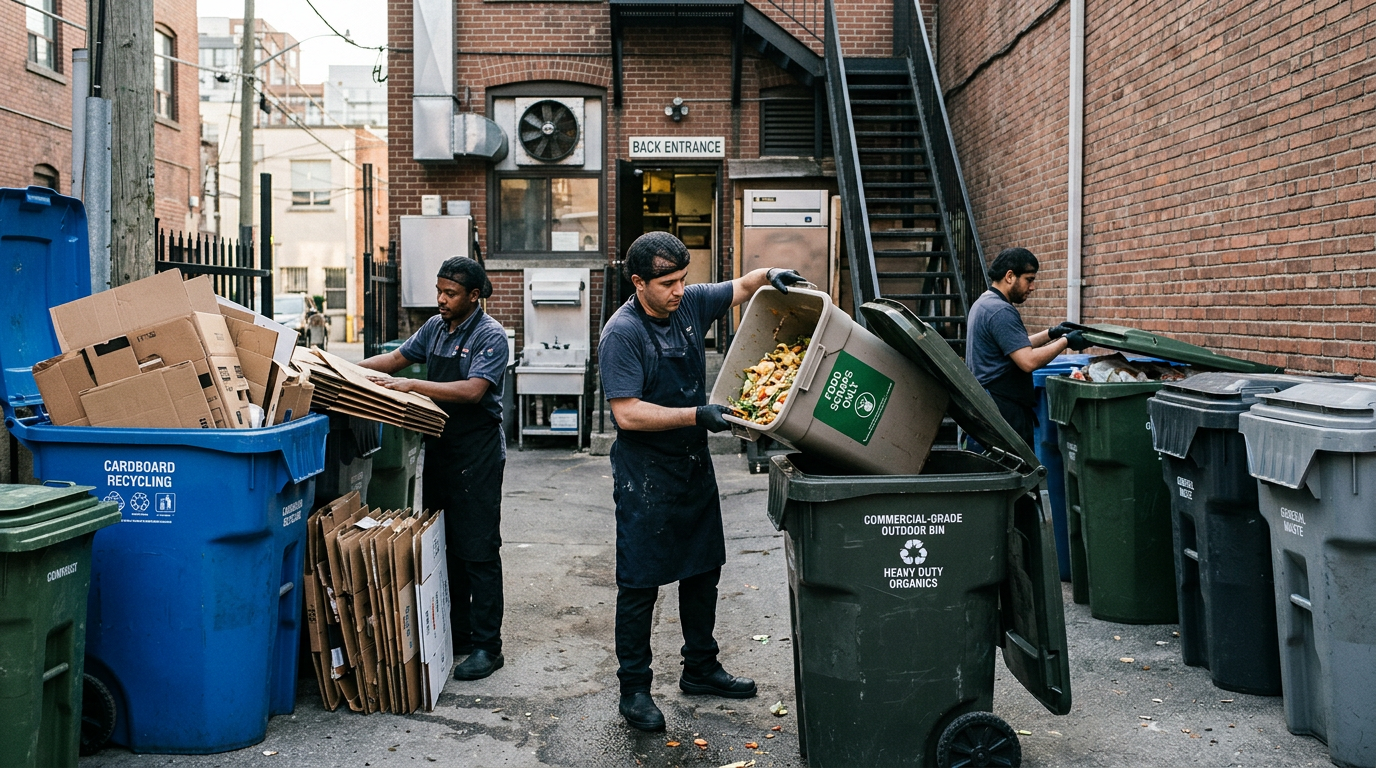
A busy restaurant produces waste all day long. Prep cooks fill bins with peels, trimmings, and shells before the doors open. Deliveries arrive in stacks of boxes. Lunch and dinner service add plate scraps, napkins, takeout packaging, and bottles. By closing time, the back door area can look like it took a beating, and the next delivery is already on the schedule.
Restaurant waste is different from office or retail waste. It is wet, heavy, and quick to smell. It attracts pests. It comes in large daily volumes, often with big swings between a slow Tuesday and a packed Saturday. Getting it under control takes the right containers, the right pickup schedule, and a team that knows where everything goes. That is the job commercial waste management services are designed to handle for food service operations.
This guide breaks restaurant waste into its main streams and explains how to manage each one. It covers food scraps, cardboard, glass and cans, and the daily volume that ties it all together. Restaurants that set up commercial waste management services around the way their kitchen actually runs spend less time fighting overflowing dumpsters and more time focused on guests.
Know what your restaurant throws away
Before choosing containers or schedules, look at what leaves your kitchen. Most restaurants produce some mix of:
- Food scraps from prep and plate waste
- Cardboard boxes from deliveries
- Plastic wrap, film, and foodservice packaging
- Glass bottles, aluminum cans, and plastic containers
- Paper napkins, towels, and takeout bags
- Used cooking oil and grease
- Occasional bulky items like broken equipment or furniture
The mix varies a lot. A pizzeria produces plenty of cardboard. A seafood restaurant creates heavy, smelly food waste. A bar generates bottles and cans. Knowing your own mix tells you where to focus.
A simple way to start is a short waste check. For a few days, have staff note what fills up first and when. You will quickly see which stream causes the most trouble.
Handling food scraps
Food waste is usually the heaviest and messiest part of restaurant trash. It is wet, it breaks down quickly, and it draws flies, rodents, and odors, especially in summer.
A few practices help keep it under control:
- Use lined, lidded bins at prep stations and dish areas.
- Empty kitchen bins often instead of letting them sit overnight.
- Keep outdoor containers closed at all times.
- Clean bins and the area around the dumpster regularly.
- Schedule pickups often enough that food waste never sits for long, especially in warm months.
For high-volume kitchens, a self-contained compactor is worth considering. These units are sealed, which makes them suited to wet waste. They hold more material between pickups and keep odors and liquids contained. Eagle Transfer Services offers self-contained compactors designed for wet waste.
Some restaurants also separate food scraps for composting or food recovery. Edible surplus that has been handled safely can sometimes go to local food recovery groups. State and local rules on food waste continue to change, so check what applies to your location and volume.
Getting cardboard out of the way
Cardboard is often the most visible problem behind a restaurant. Every delivery adds more. If boxes go into the trash dumpster whole, they fill it within hours and leave no room for food waste.
Cardboard is also one of the easiest materials to recycle. Setting up a separate cardboard stream usually pays off quickly. Eagle Transfer Services offers cardboard recovery and single-stream recycling programs that keep boxes out of the trash container.
To make cardboard recycling work:
- Break down every box before it goes out.
- Keep cardboard dry and free of food residue when possible.
- Store flattened boxes in a dedicated container or area.
- Train every shift, including delivery receivers, on where boxes go.
Pulling cardboard out of the trash often frees enough space to reduce trash pickups or downsize the trash container.
Glass, cans, and plastics
Bars and restaurants with beverage service generate a steady stream of bottles and cans. These materials are recyclable, but glass is heavy and noisy to handle. Keep recycling bins near the bar and dish areas so staff can sort as they go.
Rinse containers when practical. Food and liquid left in containers can contaminate recycling loads and attract pests. Single-stream recycling simplifies sorting, since glass, cans, plastic, and paper can go together in one container where the program allows it.
Used cooking oil and grease
Fryer oil and grease should never go into a dumpster or down a drain. Grease in drains causes clogs and costly plumbing problems. Grease in a trash container can leak, smell, and attract pests.
Most restaurants store used oil in a dedicated sealed container and arrange regular collection through a licensed grease or oil recycler. Grease traps and interceptors also need routine cleaning under local rules. Keep these separate from your regular waste plan, but schedule them with the same care.
Matching pickups to daily volume
Restaurant volume rarely stays flat. Weekends, holidays, and event days produce much more waste than slow weekdays. A pickup schedule built for an average day can leave you overflowing during peak times.
Common solutions include:
- Increasing pickup frequency during busy seasons
- Adding a second container for peak days
- Scheduling pickups the morning after your busiest nights
- Using a compactor to hold more waste between pickups
Flexible commercial waste management services make this easier. Eagle Transfer Services offers schedules that range from weekly service to multiple pickups per day, built around volume, waste type, and pickup frequency. The right schedule keeps containers from overflowing without paying for pickups you do not need.
Keep the dumpster area clean and secure
The area behind your restaurant reflects on your business. Health inspectors notice it. Neighbors notice it. Pests definitely notice it.
Good habits for the dumpster area:
- Keep lids closed and doors latched.
- Never leave bags on the ground beside the container.
- Hose down and sanitize the pad and enclosure regularly.
- Repair damaged lids, doors, and enclosures quickly.
- Lock containers if outside dumping is a problem.
A clean, orderly waste area also makes it easier for drivers to service your containers on time.
Train your team
The best waste plan fails if staff do not follow it. New hires, part-time workers, and busy closing crews all need clear direction.
Post simple signs over each bin showing what goes where. Include waste handling in onboarding. Assign a closing task to check that bins are emptied, cardboard is broken down, and outdoor containers are closed. Small routines, repeated every shift, keep the whole system working.
Review your setup regularly
Menus change. Hours change. Takeout volume grows or shrinks. Revisit your waste setup a couple of times a year to make sure your containers and schedule still fit. Eagle Transfer Services offers a free commercial waste cost analysis that can show whether you are paying for the right service.
Planning waste for a new or remodeled restaurant
The easiest time to get waste right is before the restaurant opens. If you are building out a new space or remodeling, think about trash and recycling during layout planning.
- Leave room near the back door for separate trash, recycling, and cardboard containers.
- Plan a clear, level path from the kitchen to the dumpster enclosure.
- Confirm that a hauling truck can reach the containers without blocking traffic or parking.
- Put hand sinks and bin stations near prep areas so staff can sort as they work.
- Budget for a compactor pad and power if you expect high volume.
Remodels also produce a burst of construction debris. A temporary roll-off container can handle demolition waste so it never mixes with your regular service.
Common restaurant waste mistakes
A few habits cause most of the trouble behind restaurants:
- Putting whole cardboard boxes in the trash container
- Leaving bags beside a full dumpster overnight
- Pouring grease into drains or trash containers
- Keeping the same pickup schedule year-round, even during peak seasons
- Skipping regular cleaning of bins and the enclosure
- Forgetting to train new hires on where things go
Fixing even two or three of these can make a visible difference within a week.
Handling bulky items and occasional cleanouts
Every restaurant eventually replaces something large. Old reach-in coolers, worn booths, broken tables, shelving, and outdated equipment do not belong in the daily trash container. Stuffing them in takes up space meant for food waste and can damage the container.
Schedule a bulk or special pickup instead. Eagle Transfer Services offers scheduled and on-demand removal of large items, and a short-term roll-off container works well for a full dining room refresh or kitchen overhaul. Planning these pickups ahead keeps daily service running normally while the old equipment leaves the property.
Conclusion
Restaurant waste moves fast, and the right setup keeps it from slowing down your kitchen. Eagle Transfer Services supports food service operations across Maryland, Pennsylvania, and Washington, DC with trash pickup, self-contained compactors for wet waste, cardboard recovery, single-stream recycling, and flexible schedules that match daily volume. Sort smart, schedule right, and keep the back of house as clean as the dining room.
 Dutch
 English
 Arabic
 French
 Spanish
 Portuguese
 Deutsch
 Turkish
 Italiano
 Russian
 Romaian
 Portuguese (Brazil)
 Greek