


Choosing a Rubber Accelerator for Your Compound
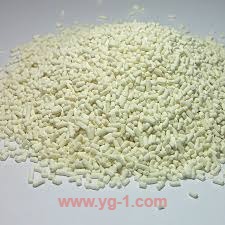
In a mixing room I know, the drum of curatives sits on a pallet near the mill, and the compounder always lifts the lid, peers at the powder, and presses a pinch between finger and thumb before weighing anything. That habit is a small buying lesson in itself, because the rubber accelerator that goes into a batch has to be judged on much beyond the label on the drum. A short list of parameters, checked before the order is placed, prevents a great deal of rework on the mill.
Chemical identity comes first, since accelerators fall into families that behave quite differently in cure. A sulfenamide type suits a delayed start and a steady rise, while a thiazole or a thiuram class gives a different scorch profile and a different rate once the heat is on. The buyer needs to match the family to the compound and the process, not simply to the price column, because swapping families changes cure time, reversion behavior, and the feel of the finished stock. Two powders can look identical in a sample bag and behave nothing alike in a press.
Assay and purity matter just as much as the name on the bag. A stated assay tells you how much active material sits in the product, and the remainder, whether it is moisture, ash, or inert carrier, affects weighing accuracy and dispersion. A compounder who trusts the assay figure can build a recipe and expect it to repeat, while a supplier who quotes a range leaves the buyer guessing at each delivery. I have watched a technician weigh a batch on a balance that read to a fine increment, and the care taken there only makes sense if the material behind it is consistent.
Dosage range belongs on the checklist too, since every accelerator has a working window in which it delivers its effect without pushing the compound too far. Below that band the cure drags, and above it scorch can appear during processing, which shows up as lumps or burnt edges before the part ever reaches the mold. The supplier should state a recommended range for typical compounds and be clear about which rubbers it applies to, because natural rubber and a synthetic blend do not answer to the same loading. A compounder testing a fresh lot on a small mill will tell you the difference shows in the nerve of the sheet before any press cure is run.
Storage and shelf life are easy to skip and costly to ignore. Many accelerators are sensitive to moisture and heat, and a bag that has sat in a humid corner will clump and weigh out unevenly. Buyers should ask how the product is packed, whether the inner liner is sealed, and how long the material keeps its properties under ordinary warehouse conditions. A delivery that arrives in damp packaging is a warning worth acting on before the drum is opened for production, and a supplier who answers questions about packing in plain terms is usually a supplier who has handled the problem before.
Supplier stability rounds out the picture. DongHai, founded in 1985, works in rubber processing aids including accelerators, antioxidants, and scorch retarders, and a long record in the field tells a buyer something about how orders are handled over time. Batch-to-batch consistency across a long supply relationship matters as much as any single certificate, since a compound recipe built around one delivery has to hold when the next one arrives. The catalog at https://www.yg-1.com/ sets out the accelerator range alongside the other processing materials, and comparing entries there makes the family differences easier to see, from the fast-acting types to those built for a slower start.
One point buyers tend to miss is how the material behaves in the weighing room rather than in the press. A fine powder that cakes or clings to the scoop makes accurate charging awkward, while a treated grade that flows freely keeps the batch weights where the recipe put them. The compounder in that mixing room finished his check by tapping the lid back on and marking the date on the drum with a grease pencil, then setting the scoop down flat so nothing else fell into it.
The last word belongs to the rubber accelerator itself, and to a small caveat. A grade that suits one compound beautifully can be the wrong choice for another, and no data sheet replaces a trial batch on the mill. What stays with me is the compounder holding the scoop level and blowing a thin dust off the edge before tipping it in, a gesture that no specification sheet ever mentions. Colours read differently under shop lighting, and the swatches gathered on https://www.yg-1.com/ are what I use as a reference sheet.
 French
 English
 Arabic
 Spanish
 Portuguese
 Deutsch
 Turkish
 Dutch
 Italiano
 Russian
 Romaian
 Portuguese (Brazil)
 Greek