


Spiti Valley Budget Trip Itinerary for 6 Days: Complete Guide
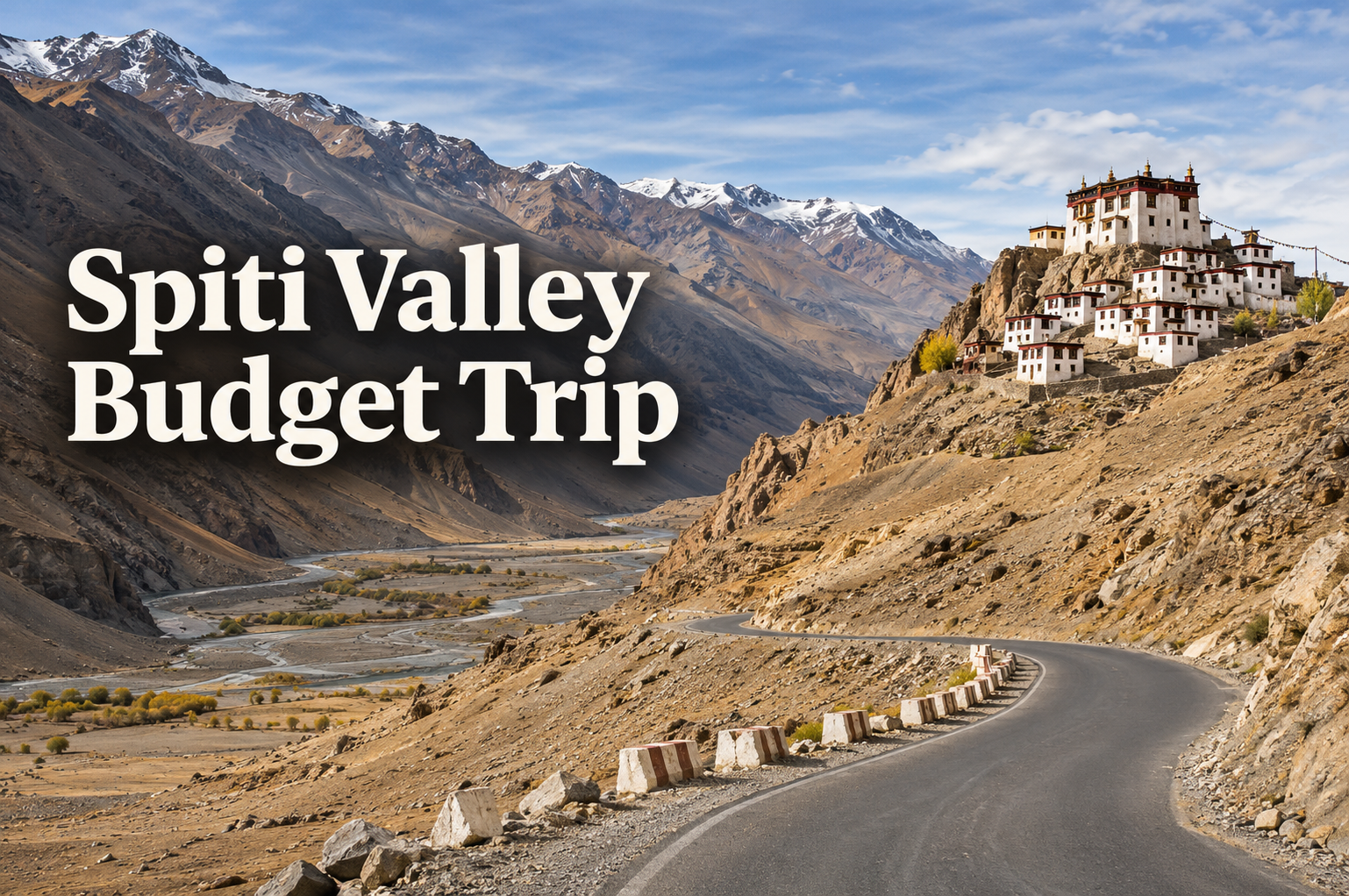
Spiti is a cold desert of white monasteries, turquoise rivers and villages that sit above 4,000 metres. Many travellers think it is expensive, but a well-planned Spiti Valley budget trip proves otherwise. With shared transport, homestay rooms and local food, six days are enough to see the best of the valley without stretching your wallet.
This guide gives you a day-wise plan, a clear view of where your money goes, saving tips, winter advice and answers to the questions travellers ask most.
Why This Six-Day Route Works for Budget Travellers
This plan follows the Shimla and Kinnaur side. This is the safer and more reliable approach because the road stays open for longer in the year. It also lets your body adjust to altitude slowly, which matters more than any other part of the plan. Public buses and shared taxis run on this route, so you do not need a private car for the whole journey.
If you want to know the Spiti Valley budget trip cost in detail, think about four buckets: transport, stay, food and sightseeing. Each section below shows you how to keep every bucket lean.
Trip at a Glance
|
Day |
Route |
Main Highlights |
|---|---|---|
|
1 |
Shimla to Kalpa |
Narkanda, Sarahan, Kinnaur views |
|
2 |
Kalpa to Tabo |
Nako Lake, Tabo Monastery |
|
3 |
Tabo to Kaza |
Dhankar Monastery, Pin Valley option |
|
4 |
Kaza local sightseeing |
Key Monastery, Kibber, Chicham, Langza |
|
5 |
Kaza to Kalpa |
Return via the Hindustan-Tibet Road |
|
6 |
Kalpa to Shimla |
Onward journey home |
Day 1: Shimla to Kalpa
Leave Shimla early in the morning and take a bus towards Reckong Peo. The road climbs through Narkanda, drops to Rampur and follows the Sutlej river into Kinnaur. Stop at Sarahan if time allows, because the Bhimakali Temple is worth a short visit.
Reach Reckong Peo by evening and take a local bus or shared taxi up to Kalpa. Check into a simple guesthouse with a view of the Kinner Kailash range. Kalpa sits at a moderate altitude, so it is a good place to start acclimatising.
Day 2: Kalpa to Tabo via Nako
This is the day the landscape changes. Green apple orchards give way to dry brown mountains, and the road hugs sheer cliffs. Catch the morning bus from Reckong Peo towards Kaza and get off at Nako, where a calm lake sits beside a small village. Spend an hour there, eat a simple lunch and continue to Tabo.
Tabo Monastery is over a thousand years old and holds ancient murals and clay sculptures. Many travellers call it the Ajanta of the Himalayas. Book a basic homestay or monastery guesthouse for the night and drink plenty of water, because altitude begins to matter here.
Day 3: Tabo to Kaza via Dhankar
Visit the Tabo caves in the morning, then travel towards Kaza. Break the journey at Dhankar, where a monastery clings to a cliff above the confluence of the Spiti and Pin rivers. A short trek leads to Dhankar Lake. It is an easy walk, but go slowly and rest often.
Reach Kaza by late afternoon. This is the main town of the valley and the base for the next day. Choose a budget homestay, order a hot meal and sleep early.
Day 4: Kaza and the High Villages
This is your full sightseeing day. Hire a shared taxi with other travellers to split the fare, which keeps the day affordable. A good loop covers these places:
- Key Monastery: the largest monastery in the valley, perched on a hilltop
- Kibber: one of the highest villages in the world with a motorable road
- Chicham Bridge: one of the highest bridges in Asia, set above a deep gorge
- Langza, Hikkim and Komic: fossil village, the world's highest post office and a high-altitude hamlet
Send a postcard from Hikkim, because it is a small joy that costs almost nothing. Return to Kaza in the evening and rest.
Day 5: Kaza to Kalpa
Start before sunrise, since this is a long driving day. Retrace the route through Tabo and Nako and aim to reach Reckong Peo or Kalpa by night. If your body feels tired, stay in Tabo or Nako and complete the descent the next morning, because comfort matters more than a tight schedule.
Day 6: Kalpa to Shimla
Take the morning bus down to Shimla and arrive by evening. From there, connect to Chandigarh or Delhi by bus or train. Book your onward ticket in advance, so you are not stranded at the end of the trip.
Where Your Money Goes
A realistic breakdown helps you plan better. We keep exact figures out of this guide, because fuel, season and demand change rates often. Here is how a typical spend divides:
- Transport: the biggest share. State buses are the cheapest, shared taxis cost more but save time, and a private cab costs the most.
- Stay: homestays and monastery guesthouses cost far less than hotels and usually include a warm meal.
- Food: local dal, rice, thukpa and momos are filling and inexpensive.
- Extras: entry fees are minimal, but keep a small buffer for cash, because ATMs are rare beyond Kalpa and Kaza.
Once you map these four buckets, the Spiti Valley budget trip cost becomes easy to predict and control.
Money-Saving Tips for Spiti
- Travel by bus where possible. Public buses are slow but very cheap and let you meet other travellers.
- Share taxis. Split local sightseeing with two or three people.
- Choose homestays. They give you warmth, home-cooked food and local stories.
- Carry cash. Digital payments often fail due to weak networks.
- Carry a refillable bottle. Bottled water adds up quickly at high altitude.
- Pack warm layers. Buying a jacket on the way costs more than carrying one from home.
- Travel off-peak. Rates drop outside the summer rush.
Adding Lahaul to Your Plan
Many travellers want a budget trip to Lahaul Spiti as a single loop. In summer, you can enter from Manali, cross the Atal Tunnel, pass Keylong and Kunzum Pass, and reach Kaza, then exit through Kinnaur. This loop adds two or three days but rewards you with Chandratal Lake and Lahaul's green valleys. A Lahaul Spiti tour of this kind works only when the Manali road is open, so confirm the status before you leave.
Best Time and Winter Advice
The best months run from May to October, when roads are open and the weather is stable. Winter is a different experience. Heavy snow closes the Manali side, and even the Kinnaur route can shut after fresh snowfall. Temperatures drop far below freezing, and many homestays and eateries close.
But winter also brings frozen landscapes, empty monasteries and snow leopard sightings near Kibber and Langza. If you plan a winter trip, take these steps:
- Check road and weather updates a day before every leg
- Keep two or three buffer days in your schedule
- Choose stays that offer heaters and hot water
- Carry thermal wear, a quality jacket, gloves and woollen socks
Altitude and Safety
Acute mountain sickness can affect anyone above 3,000 metres. Climb slowly, drink water, avoid alcohol on the first nights and rest if you feel dizzy or get a headache. Do not push on if symptoms get worse. Descend and seek medical help. Carry basic medicines and a power bank, and tell your family your daily route.
Frequently Asked Questions
How many days do you need to cover Spiti properly?
Six days is the minimum for the Shimla to Kaza loop. Seven to eight days give you a more relaxed pace and time for Pin Valley.
Can I do Spiti on a tight budget without a private car?
Yes. State buses connect Shimla, Reckong Peo, Tabo and Kaza, and you can book shared taxis for local sightseeing. Plan for slower travel and some waiting time.
Do Indian travellers need a permit for Spiti?
Indian citizens do not need a permit for this route. Foreign nationals need an Inner Line Permit for parts of Kinnaur and Spiti, so they should apply in advance.
Is Spiti open in winter?
Partly. The Manali route closes after heavy snowfall. The Kinnaur route stays open more often, but delays are common. Always check conditions before you start.
Which is the best base for sightseeing in Spiti?
Kaza. It has the most stay options, shops, fuel and transport, and the best villages lie within a day's drive.
Is it safe to travel to Spiti solo?
Yes, many solo travellers visit every year. Stay on main routes, avoid night driving, keep your family informed and respect altitude limits.
What should I pack?
Pack thermal layers, a windproof jacket, sunscreen, sunglasses, lip balm, a power bank, personal medicines and enough cash.
Plan Your Spiti Journey with TourTravelWorld
If you prefer a planned trip with confirmed stays, reliable transport and local support, TourTravelWorld can handle everything for you. Our team customises routes, adjusts the pace for altitude and keeps you updated on road conditions. Explore a Spiti Valley budget trip with TourTravelWorld and send an enquiry today for a plan that fits your dates and budget.
 French
 English
 Arabic
 Spanish
 Portuguese
 Deutsch
 Turkish
 Dutch
 Italiano
 Russian
 Romaian
 Portuguese (Brazil)
 Greek