


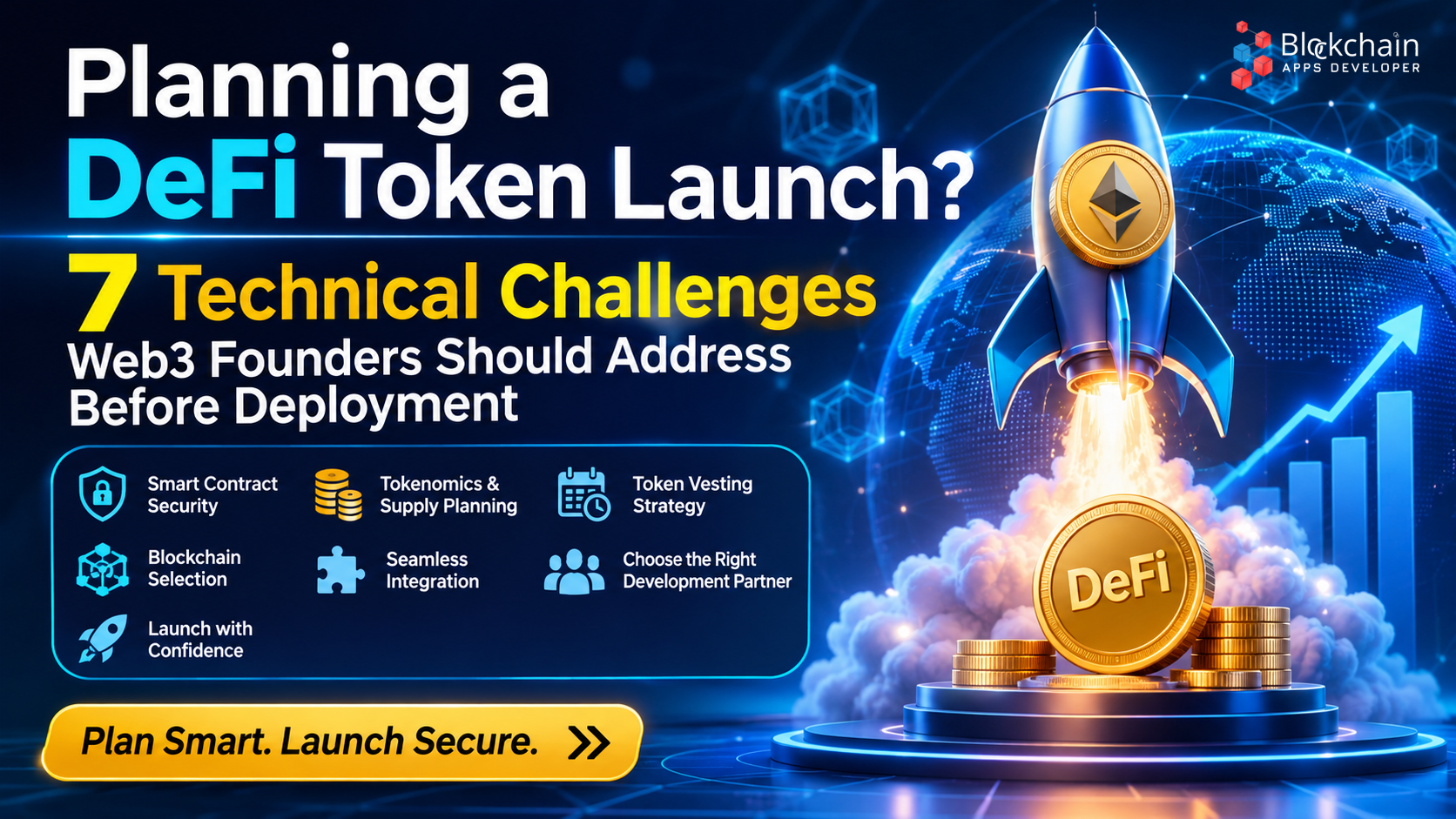
Planning a DeFi Token Launch? 7 Technical Challenges Web3 Founders Should Address Before Deployment
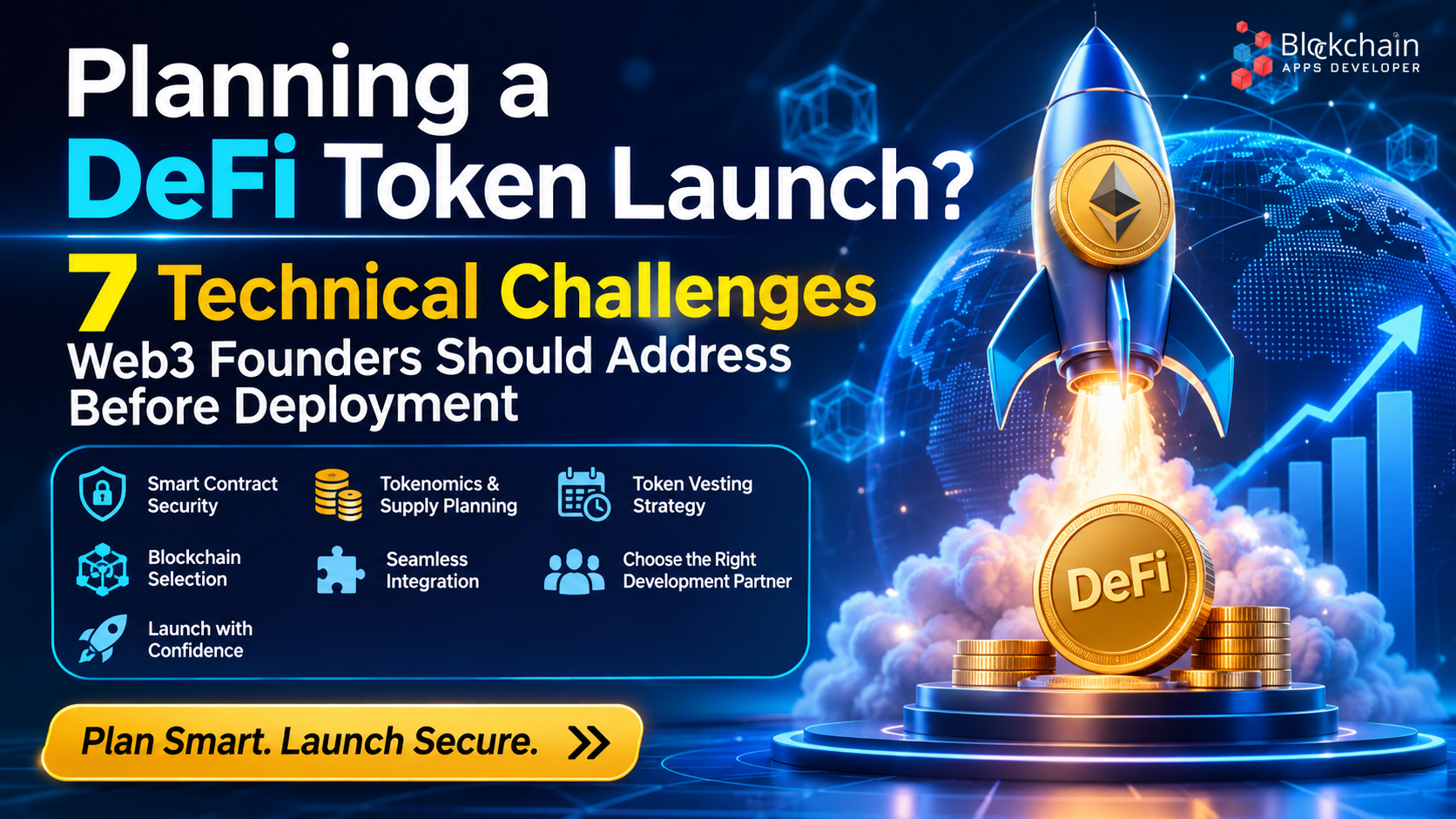
Launching a DeFi token involves more than selecting a blockchain and creating a smart contract. Founders must decide how the token will function, how its supply will be managed, how users will interact with it, and how the underlying contracts will be tested before deployment.
These decisions become particularly challenging for early-stage Web3 startups. A founder may have a lending platform, staking application, decentralized exchange, or governance model ready to develop, but lack the technical resources to implement the token infrastructure.
A rushed development process can lead to problems such as incorrect token permissions, poorly implemented vesting schedules, unexpected contract behaviour, and integration difficulties. Addressing these areas before deployment gives founders a clearer development roadmap.
Here are seven technical challenges every Web3 founder should consider before launching a DeFi token.
1. Defining the Token's Purpose Before Writing the Smart Contract
One of the first decisions is understanding why the project needs a token.
Some startups introduce tokens for governance, while others use them for platform access, rewards, staking, or ecosystem participation. Each purpose creates different technical requirements.
For example, a DeFi platform introducing a governance token may need voting functionality and rules for proposal submission. A staking platform may require reward calculations, deposit management, and withdrawal conditions.
Before development begins, founders should define:
-
The primary purpose of the token.
-
The functions available to token holders.
-
Whether the token requires governance or staking features.
-
The intended supply model.
-
The blockchain network on which it will operate.
-
How the token will interact with the existing application.
A clearly defined use case helps developers select the right token standard and avoid adding unnecessary functionality.
2. Protecting the Project Against Smart Contract Vulnerabilities
Smart contracts control important blockchain operations. Depending on the project, they may manage token transfers, staking deposits, rewards, governance, and access permissions.
A coding mistake in one of these functions can create problems that are difficult to correct after deployment.
For DeFi founders, security should be considered throughout the development process rather than treated as a final checklist.
Common areas that require attention include:
Access control: Administrative functions such as minting, pausing, and changing contract settings should have clearly defined permissions.
Reentrancy: Developers should review external contract interactions and ensure that execution logic cannot be exploited through unexpected repeated calls.
Integer and calculation errors: Token balances, reward calculations, fees, and percentage-based operations must be handled carefully.
Unchecked external interactions: Contracts that communicate with other protocols should validate returned data and handle failed transactions appropriately.
Unrestricted supply changes: Minting and burning permissions should follow the project's documented token supply rules.
What should founders do before deployment?
A practical security process should include code reviews, automated testing, scenario-based testing, and permission checks. Depending on the project's complexity and risk, an independent smart contract audit may also be necessary.
Founders should ask their development team what has been tested, which risks remain, and how contract changes will be handled.
3. Planning Token Supply and Distribution
Tokenomics is not simply about deciding how many tokens a project will create. It involves defining how tokens enter the ecosystem, who receives them, and what role they play in the product.
An unclear allocation model can create confusion among contributors, community members, investors, and other participants.
A project may divide its token supply into categories such as:
-
Community incentives
-
Ecosystem development
-
Development team allocation
-
Strategic partnerships
-
Treasury reserves
-
User rewards
Each allocation should have a documented purpose and release condition.
Founders should also understand the difference between total supply and circulating supply. Tokens that have been created but are locked or not yet distributed may affect how the project communicates its supply figures.
The technical implementation should reflect the approved token distribution plan. This may require custom smart contracts, controlled minting functions, vesting contracts, or treasury management mechanisms.
4. Implementing Token Vesting Without Manual Distribution Problems
Token vesting is important when a project plans to release allocated tokens over a specific period.
For example, a startup may allocate tokens to its development team but decide that those tokens should become available gradually over 24 months instead of being transferable immediately.
Managing such arrangements manually can create administrative work and opportunities for mistakes.
A vesting smart contract can automate the release according to predefined conditions.
Before implementation, founders should establish:
-
The total number of tokens assigned to each beneficiary.
-
The cliff period, if applicable.
-
The overall vesting duration.
-
The frequency of token releases.
-
The rules for beneficiary changes.
-
The permissions available to administrators.
The development team should test different scenarios, including missed release periods, incorrect beneficiary addresses, and attempts to withdraw tokens before they become available.
Vesting does not eliminate market volatility or guarantee long-term token value. Its purpose is to enforce agreed token release conditions consistently.
5. Selecting a Blockchain That Fits the Project
Choosing a blockchain based only on popularity can create unnecessary technical limitations.
The right network depends on the project's functionality, expected transaction activity, ecosystem requirements, wallet compatibility, and development resources.
For example:
Ethereum: Often considered by projects that want access to its established smart contract ecosystem and DeFi infrastructure.
BNB Smart Chain: An option for projects that require EVM compatibility and access to applications within its ecosystem.
Solana: May be suitable for projects evaluating its account-based architecture and high-throughput transaction capabilities.
Before selecting a network, founders should compare:
-
Transaction costs and fee structures.
-
Network performance and availability.
-
Smart contract development tools.
-
Wallet and application compatibility.
-
Available infrastructure providers.
-
Ecosystem adoption and integration requirements.
A blockchain that works well for one DeFi product may not be the best choice for another. Network selection should follow the product's technical requirements.
6. Integrating the Token With Wallets and DeFi Applications
Creating a token contract does not automatically make it fully functional within a DeFi application.
The token may need to interact with wallets, staking platforms, decentralized exchanges, dashboards, or other smart contracts.
For example, a staking platform must correctly identify token balances, process deposits, calculate rewards, and manage withdrawals. Each interaction requires appropriate contract logic and integration testing.
Founders should consider:
-
Wallet connectivity and transaction signing.
-
Token balance and transaction display.
-
Smart contract communication.
-
Blockchain event monitoring.
-
Transaction failure handling.
-
Compatibility with the project's frontend and backend.
Integration should be tested using the actual application workflow, not just by confirming that the token contract can transfer tokens between two addresses.
7. Finding the Right Blockchain Development Team
Many Web3 founders do not have an in-house blockchain engineering team when they begin planning a token launch.
Hiring developers, managing smart contract implementation, reviewing security, and coordinating deployment can become a significant responsibility for an early-stage startup.
This is why selecting an experienced development partner matters.
Before choosing a token development company, founders should evaluate the team's ability to understand and implement the project's requirements.
Important questions include:
-
Does the team have experience with the required blockchain network?
-
Can it develop custom token functionality?
-
Does it understand smart contract testing and security practices?
-
Can it implement vesting and token distribution mechanisms?
-
Can it integrate the token with wallets and other applications?
-
Does it provide deployment documentation and technical handover?
The development scope should be agreed upon before work begins. Founders should understand which services are included, which require separate security specialists, and what ongoing maintenance arrangements are available.
A Practical Checklist Before Launching a DeFi Token
Before moving towards mainnet deployment, review these essential requirements:
-
The token's purpose and functionality are clearly documented.
-
The blockchain network has been selected based on project requirements.
-
The token supply and allocation model have been defined.
-
Vesting and release conditions have been established where required.
-
Smart contract permissions have been reviewed.
-
Core contract functions have been tested.
-
Relevant security reviews have been completed.
-
Wallet and application integrations have been validated.
-
Deployment procedures and administrative responsibilities are documented.
-
Legal and regulatory requirements have been reviewed with qualified professionals.
This checklist gives founders a practical starting point for identifying development gaps before deployment.
Building a DeFi Token Requires the Right Technical Foundation
A DeFi token is part of a larger blockchain product. Its usefulness depends on how well its functionality, smart contracts, distribution mechanisms, and application integrations work together.
For startups without dedicated blockchain developers, coordinating these requirements internally can be difficult.
At BlockchainAppsDeveloper, we provide blockchain and token development services for businesses planning Web3 products. Our development capabilities include ERC-20 and BEP-20 token development, Solana token development, custom smart contract development, token testing, deployment, and wallet integration.
Whether you are developing a governance token, utility token, or token-based DeFi application, defining the technical requirements early can help establish a more organised development process.
Explore our token development solutions to learn more about the technical services available for your next blockchain project.
Build with a clear technical strategy. Develop with the right blockchain expertise.
 Greek
 English
 Arabic
 French
 Spanish
 Portuguese
 Deutsch
 Turkish
 Dutch
 Italiano
 Russian
 Romaian
 Portuguese (Brazil)