


What Makes Linear Voltage Regulators a Practical Choice for Reliable Power Management?
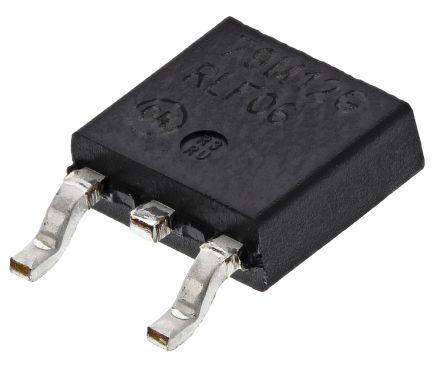
Linear Voltage Regulators are widely used in electronic systems that need a controlled, stable, and low-noise supply voltage. They are especially useful when sensitive components must operate within a narrow voltage range and when electrical interference needs to be kept to a minimum. Their simple working principle, compact implementation, and predictable behaviour make them suitable for many industrial, commercial, and embedded electronic applications.
Power regulation is a fundamental part of circuit design because electronic components rarely operate reliably from an uncontrolled supply. Linear voltage regulators help ensure that the voltage reaching processors, sensors, amplifiers, and control devices remains within acceptable limits even when the original input changes.
Why Do Electronic Systems Need Regulated Power?
A raw power source does not always provide perfectly stable voltage. Batteries discharge over time, mains-derived supplies may experience fluctuations, and connected loads can change their current demand during operation.
Without proper regulation, these changes can affect the performance of sensitive electronic components. A processor may restart unexpectedly, a sensor may produce inconsistent readings, or an analogue circuit may suffer from unwanted signal distortion.
A regulated supply helps create a more predictable environment for the entire circuit.
The main benefits include:
- More consistent component operation
- Improved voltage accuracy
- Reduced risk of unexpected resets
- Better signal quality
- Greater circuit stability
- Improved protection for sensitive devices
- More dependable long-term performance
This is why voltage regulation is considered a core requirement in many electronic designs.
How Do Linear Voltage Regulators Control Power?
A linear regulator works by continuously adjusting an internal pass device between the input supply and the output load.
The regulator compares the actual output voltage with an internal reference. When the output begins to move away from the required value, the internal control circuitry adjusts the pass element to restore the correct voltage.
This process happens automatically and continuously.
Because the regulator does not use rapid switching as its main method of conversion, the resulting output is generally smooth and low in electrical noise. This can be highly beneficial in systems where power quality is more important than maximum conversion efficiency.
Why Are Linear Regulators Well Suited to Low-Noise Circuits?
Electrical noise can interfere with the operation of sensitive electronics. In analogue systems, unwanted noise may appear directly in the signal path. In communication equipment, interference can reduce signal quality. In measurement systems, noise can affect accuracy.
Linear regulators are often chosen because they can provide relatively clean output voltage with low ripple and limited electromagnetic interference.
Which Applications Benefit Most From Cleaner Power?
Low-noise regulation can be valuable in many systems, including:
- Precision instrumentation
- Audio circuits
- Sensor interfaces
- RF equipment
- Data acquisition hardware
- Analogue signal processing
- Medical electronics
- Laboratory devices
In these applications, improving the power supply can contribute directly to better overall system performance.
What Is the Difference Between Fixed and Adjustable Regulation?
Linear regulators are available in several configurations, with fixed and adjustable versions among the most common.
A fixed regulator provides a predefined output voltage. This type is useful when a system requires a standard voltage rail and no adjustment is necessary.
An adjustable regulator allows the designer to set the output voltage using external components. This provides greater flexibility when a circuit requires a specialised voltage level.
When Should a Fixed Regulator Be Used?
A fixed regulator is often suitable when simplicity and fast implementation are priorities.
It can be a good choice when:
- The required output voltage is standard
- The design needs fewer external components
- PCB space is limited
- Simple assembly is preferred
- Repeatable output is important
When Is an Adjustable Regulator More Suitable?
An adjustable regulator may be preferred when the design requires a custom voltage or additional flexibility.
It can be useful in prototype systems, laboratory equipment, specialised industrial electronics, and circuits with uncommon supply requirements.
How Does Dropout Voltage Affect System Operation?
Dropout voltage is the minimum difference required between the input and output voltage for the regulator to operate correctly.
If the input voltage becomes too close to the output voltage, the regulator may no longer be able to maintain regulation.
Low-dropout regulators reduce this required voltage difference. This makes them particularly valuable when the power source is limited, such as in battery-powered equipment.
A lower dropout voltage can help a system continue operating for longer as the battery voltage gradually falls.
Why Does Quiescent Current Matter in Portable Electronics?
A regulator consumes a small amount of current internally while operating. This is known as quiescent current.
In mains-powered equipment, quiescent current may have little effect on overall system performance. In battery-operated devices, however, even small continuous losses can reduce operating time.
Designers of portable systems often look for devices with low quiescent current to improve battery efficiency.
These regulators can be useful in:
- Wireless sensors
- Portable instruments
- Battery-powered controllers
- Remote monitoring devices
- Standby electronics
- Low-power embedded systems
Choosing an appropriate quiescent current rating can therefore have a significant effect on battery life.
How Should Designers Evaluate Thermal Performance?
One of the most important limitations of linear regulation is heat generation.
The regulator converts excess voltage into heat. The amount of heat depends largely on the difference between the input and output voltage and the current flowing through the device.
A small voltage difference with a modest current may produce very little heat. A large voltage drop combined with higher current can create a much greater thermal load.
Designers should assess:
- Input voltage
- Output voltage
- Maximum load current
- Package thermal resistance
- Ambient temperature
- PCB copper area
- Available airflow
- Heat sinking requirements
Proper thermal planning can help prevent overheating and improve component life.
What Protection Features Can Improve Reliability?
Many modern regulators include built-in protective functions designed to reduce the risk of damage.
Common examples include:
- Current limiting
- Thermal shutdown
- Short circuit protection
- Overtemperature protection
- Reverse-current protection
- Output discharge functions
These features can help improve reliability in systems exposed to changing or unexpected operating conditions.
However, protection features should support good circuit design rather than replace it.
When Is a Linear Regulator a Better Choice Than a Switching Converter?
Switching converters are often selected when high efficiency is the main priority. They are especially useful when the input voltage is much higher than the required output or when the system draws large amounts of current.
Linear regulators can be more appropriate when low noise, simple design, and predictable behaviour are more important.
They are often chosen when:
- The voltage difference is relatively small
- Current demand is moderate
- Noise must be minimised
- Electromagnetic interference is undesirable
- The circuit needs fewer external components
- Design simplicity is important
In many designs, both technologies are combined to achieve the advantages of each.
How Can Linear Voltage Regulators Support Long-Term Electronic Reliability?
Linear Voltage Regulators remain an important part of modern power management because they offer a practical combination of voltage stability, simplicity, low noise, and dependable operation.
Their value is especially clear in systems where sensitive electronics must receive clean and controlled power. By selecting the correct output voltage, current rating, dropout performance, quiescent current, thermal capability, and protection features, designers can create power systems that operate consistently under changing conditions.
As electronic devices continue to become more precise and power-sensitive, linear regulation will remain a valuable solution for applications that prioritise clean power, predictable performance, and reliable circuit operation.
 Russian
 English
 Arabic
 French
 Spanish
 Portuguese
 Deutsch
 Turkish
 Dutch
 Italiano
 Romaian
 Portuguese (Brazil)
 Greek