


Cloud Kitchen Dubai
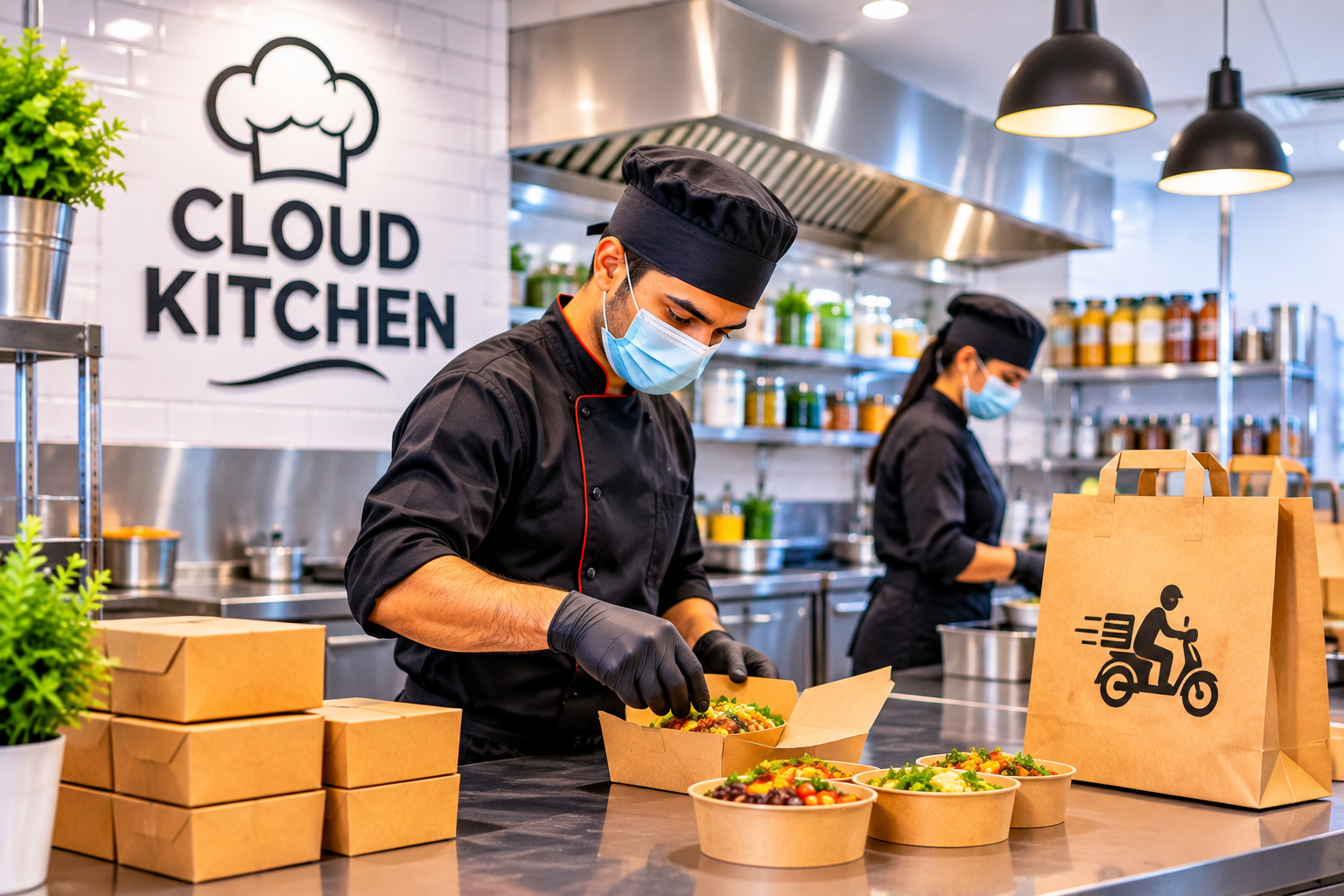
Cloud Kitchen Dubai: A Practical Guide to Starting a Delivery-Focused Food Business
Dubai is a city where people order food at all hours, from apartments, offices, hotels, and beachfront communities. That demand has made the Cloud Kitchen Dubai model a serious option for entrepreneurs and established restaurant groups who want to serve customers through online orders without the cost of a traditional dining space. This guide covers how the model works, what to consider before launching, and what drives long-term growth.
What Is a Cloud Kitchen in Dubai?
A cloud kitchen, also known as a ghost kitchen or dark kitchen, is a commercial kitchen built for delivery and takeaway only. There is no dining area and no walk-in customer base. Orders come through delivery apps, a brand’s own website, or social channels, and riders collect the food from the kitchen.
In Dubai, a Cloud Kitchen Dubai operation may run a single brand, several virtual brands from one kitchen, or a station inside a shared facility. Some established restaurants also use delivery-only kitchens to reach neighbourhoods their main outlet does not cover.
Why Dubai Is an Attractive Location for Cloud Kitchen Businesses
Several factors make the city well suited to this model:
- A diverse, international population: Residents and visitors from many countries create demand for a wide range of cuisines, which suits niche and specialised brands.
- High digital adoption: Residents are comfortable ordering through apps and paying online.
- Established delivery infrastructure: Multiple delivery platforms and rider networks already operate across the emirate.
- Dense residential and business districts: Compact areas make it practical to serve many customers within a short delivery radius.
- A business-friendly environment: Dubai has clear processes for company setup, though requirements should always be confirmed with the relevant authorities.
None of this guarantees success, but it provides a strong foundation for a well-run operation.
How the Cloud Kitchen Business Model Works
An order arrives through a delivery platform or the brand’s own channel and appears on a kitchen display or POS system. The team prepares the dish, packs it in sealed, delivery-ready packaging, and hands it to a rider.
Operators typically keep menus focused on items that hold up well in transit, which reduces ingredient variety, speeds up preparation, and limits waste. Revenue comes from direct orders and aggregator orders, with commissions and marketing costs being significant factors in profitability.
Important Factors When Choosing a Kitchen Location
Location matters even without customers visiting. Consider:
- Delivery coverage: Choose an area that lets riders reach your target neighbourhoods quickly, since long delivery times hurt food quality and ratings.
- Traffic and access: Check road access, parking for riders, and peak-hour congestion.
- Target customers: Match your location to where your audience lives or works, such as family communities, office hubs, or student areas.
- Competition: Review how many similar brands already serve the zone.
- Premises suitability: Confirm that the space can be approved for commercial food preparation, including ventilation, drainage, and utilities.
- Shared versus standalone space: Shared kitchens can reduce setup effort, while standalone units offer more control.
Licensing and Food Safety Approval Considerations
Operating a food business in Dubai involves registration and approvals from government bodies. Requirements typically relate to a trade licence, food establishment permits, and food safety inspections, and the specific authorities and steps can depend on your activity type, premises, and location (for example, mainland versus free zone).
Rules and fees change over time, so avoid relying on blog posts, including this one, for exact requirements. Check directly with the Dubai Economy and Tourism department, Dubai Municipality, and any relevant free zone authority, or work with a licensed business setup consultant. Also confirm that your chosen premises is approved for the intended food activity before signing a lease.
Food safety practices matter beyond the paperwork. Maintain temperature control, hygiene routines, allergen labelling, staff training, and clear records.
Equipment, Staffing, and Delivery Requirements
Equipment: Needs depend on the menu, but most kitchens require commercial cooking appliances, refrigeration and storage, prep tables, proper exhaust and ventilation, and a packing station. A POS or order management system helps consolidate orders from multiple channels.
Staffing: A small team usually includes chefs or cooks, kitchen assistants, a packing and dispatch coordinator, and a manager. Training in hygiene and consistent recipe execution is essential.
Delivery: Decide whether to rely on aggregator riders, run your own fleet, or combine both. Own delivery gives more control but adds management responsibility. Invest in tamper-evident, heat-retaining packaging, especially during Dubai’s hot months.
Benefits and Challenges of Operating a Cloud Kitchen in Dubai
Benefits:
- Lower overheads than a full dine-in restaurant, with no front-of-house space
- Flexibility to test menus and launch new brands
- Scalability across multiple brands or areas
- Access to order data that shows what customers want
Challenges:
- Strong competition and heavy reliance on online visibility
- Platform commissions that can reduce margins
- Maintaining quality during delivery in high heat
- Rent, labour, and ingredient costs that vary
- Building loyalty when customers never visit in person
Tips for Building a Competitive Food Delivery Business
- Define a clear niche. A distinct cuisine or concept stands out better than a generic menu.
- Keep the menu tight. Fewer items improve speed and consistency.
- Prioritise packaging. Presentation and temperature on arrival shape reviews.
- Monitor ratings. Respond to feedback quickly and fix recurring issues.
- Build direct channels. A website or app and customer data reduce dependence on aggregators.
- Track costs and data. Review food cost, wastage, and peak order times regularly.
- Plan for growth gradually. Prove one kitchen works before adding brands or locations.
Conclusion
A Cloud Kitchen Dubai venture can be a flexible, lower-overhead way to enter the city’s food market, but it rewards preparation. Choose a location that supports fast delivery, confirm every licensing and food safety requirement with the proper authorities, build a focused menu, and use data to improve over time. Entrepreneurs who treat quality, consistency, and customer experience as priorities are best placed to build a lasting Cloud Kitchen Dubai business.
FAQs
1. Do I need a licence to start a cloud kitchen in Dubai?
Yes. A food business generally needs a trade licence and food safety approvals. The exact requirements depend on your activity and location, so confirm them with the relevant Dubai authorities.
2. Can one kitchen run multiple brands?
Yes. Many operators run several virtual brands from one kitchen to use staff and equipment more efficiently, provided the licence and approvals cover the activities involved.
3. Should I use delivery platforms or my own delivery team?
Each has trade-offs. Platforms offer reach and rider networks but charge commissions, while your own team gives more control but requires management. Many businesses use a mix.
4. Is a shared kitchen better than a standalone kitchen?
It depends on your goals. Shared kitchens can simplify setup and reduce upfront effort, while standalone kitchens offer more control over layout and operations.
 Portuguese (Brazil)
 English
 Arabic
 French
 Spanish
 Portuguese
 Deutsch
 Turkish
 Dutch
 Italiano
 Russian
 Romaian
 Greek