


How Does Debt Recovery Work? From Reminder to Resolution
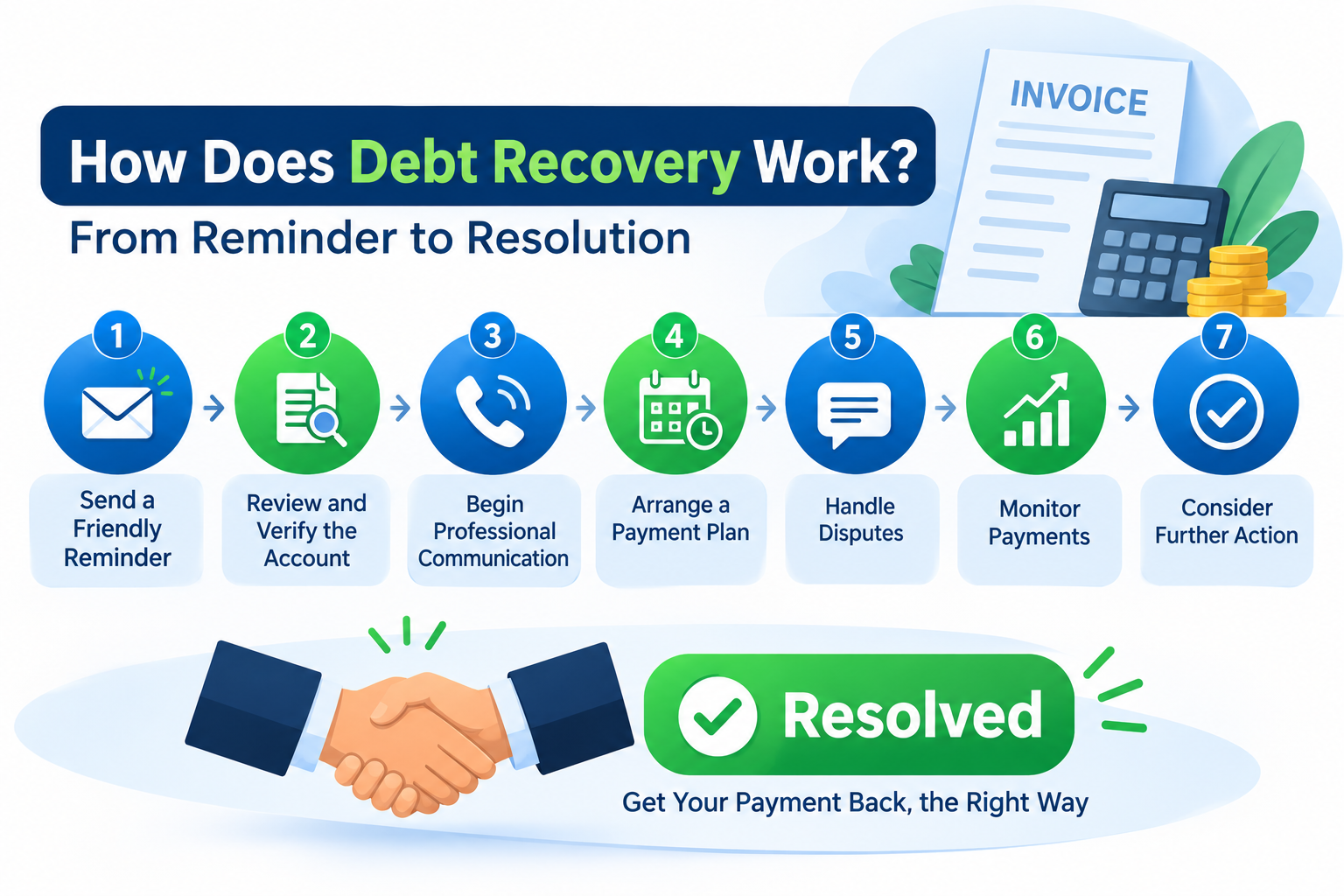
Understanding the debt recovery process helps businesses manage overdue payments without unnecessary conflict. Debt recovery focuses on collecting unpaid amounts while maintaining accurate records, clear communication, and appropriate follow-up. The process usually starts with a reminder and may continue through account review, payment arrangements, dispute handling, monitoring, and further action when necessary.
How Does Debt Recovery Work?
Commercial debt recovery involves pursuing overdue or outstanding payments. The process can include reviewing accounts, contacting debtors, arranging payments, handling disputes, and tracking progress until the account reaches a resolution.
Each case can follow a different path based on the debt type, amount owed, debtor's circumstances, client instructions, and applicable laws.
1. Send a Friendly Reminder
Businesses usually begin with a polite reminder. The message should include the invoice, amount due, and available payment options.
Many late payments result from lost invoices, delayed approvals, or temporary cash problems. A timely reminder can encourage payment while creating a record of follow-up.
2. Review and Verify the Account
If the reminder does not produce payment, the recovery team reviews the account. The team checks invoices, contracts, the amount owed, payment history, and earlier communications.
The team also confirms the debtor's contact details and account information. Accurate records support a properly documented recovery case.
3. Begin Professional Communication
The next stage may involve phone calls, emails, or letters. The recovery team explains the outstanding amount, listens to the debtor's concerns, records communications, and follows applicable communication rules.
US requirements can differ according to the debt type and state, so businesses must consider the rules that apply to each case.
4. Arrange a Payment Plan
Some debtors cannot pay the full amount immediately. A structured arrangement may use smaller installments, a first-payment deadline, and written confirmation of the agreed terms.
A realistic arrangement can help both sides move toward resolution.
5. Handle Disputes
Debtors may question the amount, charges, services, or invoice delivery. The recovery team reviews these concerns against available records, corrects genuine errors, explains unclear charges, and moves forward once both sides understand the facts.
6. Monitor Payments and Report Progress
After an arrangement begins, the recovery team tracks payments and identifies missed installments. Regular reporting helps businesses understand collected amounts, remaining balances, and the next steps.
7. Consider Further Action
If good-faith efforts do not resolve an account, the business may consider additional options. The debt amount, available evidence, applicable law, and client preferences can influence the decision. Higher-level reviews or expert advice may also involve additional costs, so businesses should assess whether those steps make sense for the account.
Consumer and Commercial Debt Recovery
Consumer debt recovery involves amounts owed by individuals and requires careful attention to communication and regulatory requirements. Commercial debt recovery involves debts between businesses, such as unpaid invoices, supplier balances, and contract payments. Contracts, purchase orders, and delivery records often play an important role in commercial cases.
When Should a Business Seek Help?
Businesses may consider a debt recovery agency when repeated reminders receive no response, invoices remain unpaid for 60 or 90 days, internal teams spend too much time chasing payments, customer relationships become strained, or an unpaid balance starts affecting cash flow.
Businesses should avoid unnecessary delays because circumstances and records can change over time.
What Does Ethical Debt Recovery Look Like?
Ethical recovery relies on respectful communication, transparency, compliance awareness, realistic expectations, and clear reporting. Businesses should also avoid unsupported promises because no one can guarantee payment for every account.
Good documentation, consistent communication, and timely follow-up can make recovery easier.
Frequently Asked Questions
How long does debt recovery take?
Simple overdue invoices may reach resolution within weeks, while complicated or disputed accounts may take months. The debtor's response, amount owed, and quality of documentation can affect the timeline.
Is debt recovery the same as debt collection?
People often use the terms interchangeably. Debt recovery generally describes the broader process of pursuing overdue balances, while debt collection often refers specifically to contacting debtors and seeking payment.
Can a debtor dispute an outstanding debt?
Yes. A debtor can challenge the amount, charges, or responsibility for the debt. A proper recovery process reviews the concern and supporting records before moving forward.
Does debt recovery damage customer relationships?
Not necessarily. A respectful and factual approach can help keep conversations calm. A neutral third party can also handle difficult payment discussions while allowing the business to maintain its customer relationship.
 Romaian
 English
 Arabic
 French
 Spanish
 Portuguese
 Deutsch
 Turkish
 Dutch
 Italiano
 Russian
 Portuguese (Brazil)
 Greek