


How Much Does Film Production Insurance Cost for an Indie Feature?
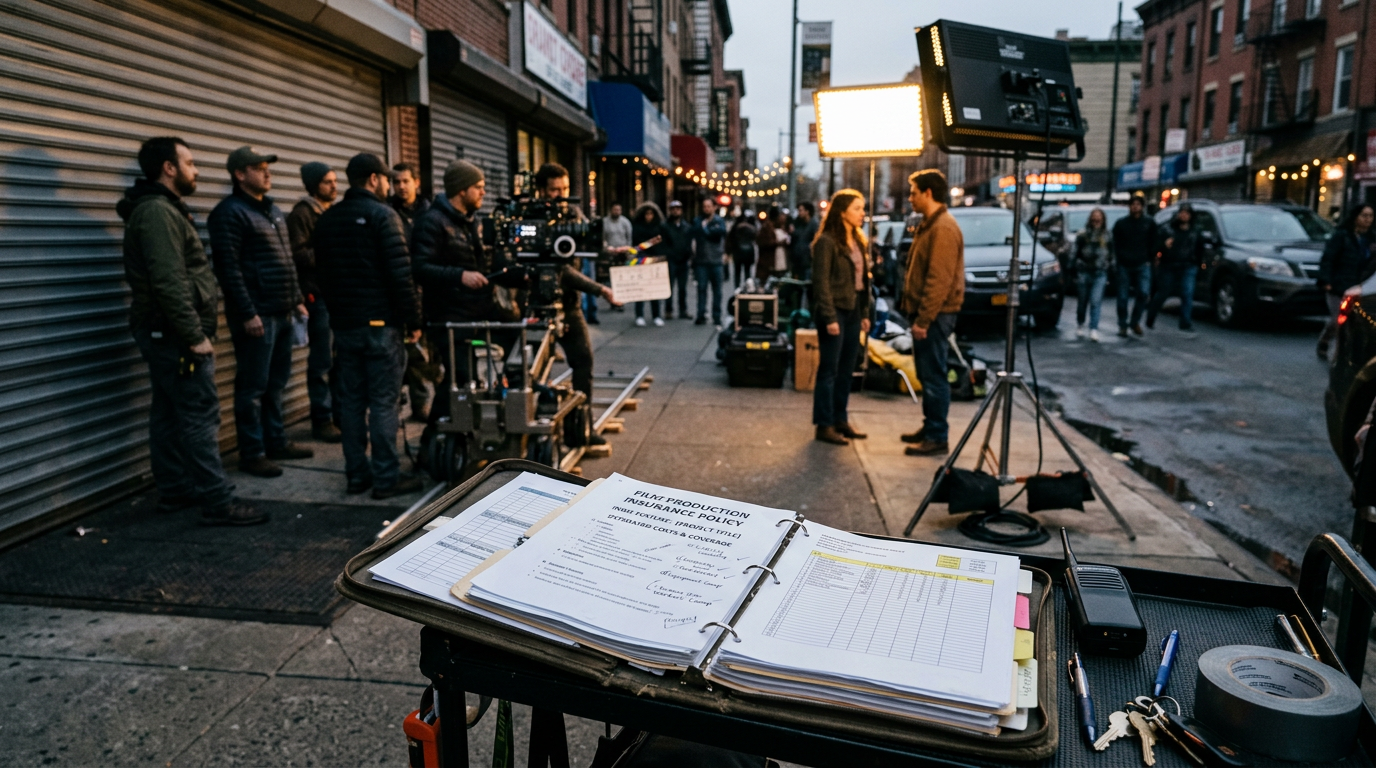
Independent filmmakers watch every dollar. When you're building a budget for a feature, insurance can look like one more line item competing with camera rentals, locations, and crew pay. But skipping coverage isn't realistic. Locations, equipment houses, unions, and distributors all expect it, and a single accident can sink a project that took years to put together.
So what does film production insurance actually cost for an indie feature? The honest answer is that it varies widely. Premiums depend on your budget, shooting schedule, locations, cast, and the kinds of scenes you plan to film. A low-budget drama shot in one town will cost far less to insure than an action picture with car chases and stunts.
This guide breaks down the factors that drive the cost of film production insurance, the coverages most indie features need, and practical ways to keep premiums manageable without leaving your project exposed.
A general rule of thumb
Many producers use a simple starting point. Insurance for a feature film often lands somewhere around 1 to 3 percent of the total production budget. A film with a $500,000 budget might expect to spend somewhere in the range of $5,000 to $15,000 on a production package.
That's only a starting estimate. Some low-risk projects come in under that range. Films with heavy stunts, large casts, or complicated locations can cost more. Minimum premiums also apply, so very small budgets may pay a higher percentage than larger ones.
The best way to know your actual cost is to get a quote based on your script, schedule, and budget.
What drives the cost
Underwriters look at several details when pricing a policy.
Budget size
Bigger budgets usually mean higher premiums. More money on screen often means more equipment, more crew, more locations, and more exposure.
Length of the shoot
A two-week shoot carries less risk than a ten-week shoot. Longer schedules increase the time your production is exposed to accidents, weather, and other losses.
Locations
Filming on a soundstage is usually lower risk than shooting on public streets, in remote wilderness, or in foreign countries. Some locations require higher liability limits.
Script content
Stunts, car chases, fights, pyrotechnics, water scenes, aerial shots, and animals all increase risk. Underwriters often review the script or a breakdown of high-risk scenes.
Cast
Cast insurance protects the production if a key actor becomes sick or injured and filming has to stop. Coverage often requires medical exams, and premiums depend on the actors involved.
Equipment value
The more expensive your camera package, lighting, and grip gear, the more you'll pay for equipment coverage.
Claims history
A production company with past claims may pay more than one with a clean record.
Coverages most indie features need
An indie feature usually needs a package of coverages. Here are the most common ones:
- General liability for third-party injuries and property damage on location
- Equipment coverage for owned and rented cameras, lighting, and sound gear
- Workers' compensation for cast and crew, often required by law
- Commercial auto, including hired and non-owned vehicles
- Props, sets, and wardrobe coverage
- Third-party property damage for locations you rent or borrow
- Faulty stock and digital media coverage for lost or corrupted footage
- Cast insurance for key actors
- Extra expense coverage for delays caused by covered losses
- Errors and omissions coverage before distribution
Not every film needs every coverage. Your broker can help identify which ones apply based on your production plan.
Short-term vs. annual film production insurance
Most indie features buy short-term coverage for the specific production. The policy runs for the length of pre-production, principal photography, and sometimes post-production.
Annual policies can make sense for production companies that make multiple projects a year. If you're producing a feature along with commercials or documentaries, an annual policy might cover more of your work for a set premium.
For a one-off indie feature, short-term film production insurance usually fits best. Ask your broker to compare both options if you have other projects planned.
Errors and omissions coverage
Errors and omissions coverage is a separate cost worth planning for early. It protects against claims like copyright infringement, defamation, invasion of privacy, and unauthorized use of names or likenesses.
Most distributors require E&O before they'll release your film. Many independent filmmakers wait until they have a distribution deal to buy it, but that can cause delays. Building E&O into your budget from the beginning prevents surprises later.
E&O underwriters typically want to see a clearance process, including talent releases, location releases, and licenses for music and artwork. Some film production insurance packages can include E&O from the start, while others quote it separately once you have a cut. Ask which approach your broker recommends, since adding it early often makes the distribution handoff smoother.
Coverage during post-production
Insurance needs don't end when principal photography wraps. Footage still sits on drives, and editing suites hold expensive hardware. Some short-term policies end with the last shooting day, while others can be extended through post. Ask how long your policy runs and whether media coverage continues while you edit and mix. Losing footage in post can be as costly as losing a shoot day, since reshoots may be impossible once cast and locations move on.
Gear you own vs. gear you rent
Many indie producers own a camera body and a few lenses, then rent everything else. Owned equipment can often be scheduled on an annual equipment policy that follows you from project to project. Rented gear is usually added for the length of the shoot. Separating the two keeps your film production insurance focused on the actual risk, so you don't pay to insure owned gear twice.
Hidden costs to plan for
Some insurance costs catch indie filmmakers off guard:
Certificates and additional insureds
Locations, equipment houses, and vendors often require certificates of insurance naming them as additional insureds. Most brokers issue these quickly, but some endorsements may carry a small fee.
Higher limits for specific locations
Some cities, parks, and property owners require liability limits higher than your base policy. Increasing limits can raise your premium.
Rental equipment requirements
Rental houses often require specific coverage amounts for the gear you rent. Make sure your equipment limit matches the total value of your rentals.
Deductibles
Lower premiums often come with higher deductibles. Know what you'll pay out of pocket before a claim. Deductibles can differ by coverage, too. Equipment might carry one amount and third-party property damage another, so read each section of the quote rather than assuming a single figure applies.
Ways to keep premiums manageable
You can't control every factor, but a few steps can help keep costs reasonable.
Provide clear information
Underwriters price uncertainty. A detailed budget, schedule, and script breakdown can help them price your project accurately.
Plan stunts carefully
Hire experienced stunt coordinators and document safety plans. Underwriters want to see that high-risk scenes are planned and controlled.
Choose deductibles wisely
A higher deductible can lower your premium. Just make sure the production can afford the deductible if something goes wrong.
Bundle coverages
Buying a full production package through one broker can be more cost-effective than buying separate policies from different sources.
Keep a clean safety record
A history of safe productions can help with future pricing.
Shop early
Starting the insurance process early gives you time to compare options and adjust your plans if certain scenes drive up costs.
Budget for insurance from the start
Too many indie filmmakers treat insurance as an afterthought. Then a location manager or rental house asks for a certificate, and the production scrambles.
Include insurance in your earliest budget drafts. Get a preliminary quote once you have a script and rough schedule. Update your estimate as plans change. This approach keeps insurance from becoming a last-minute shock.
Questions to ask when getting a quote
When you request a quote, ask:
- What coverages does this package include?
- What are the limits and deductibles for each coverage?
- Are there exclusions for stunts, drones, water work, or animals?
- Does the policy cover rented equipment, and up to what value?
- Is cast insurance included or quoted separately?
- How quickly can you issue certificates of insurance?
- When should I buy errors and omissions coverage?
The answers will help you compare quotes and understand what you're paying for.
Planning your coverage
Insurance costs for an indie feature vary, but planning ahead keeps them predictable. Knowing what drives premiums, which coverages you need, and how to present your project to underwriters can help you get solid protection at a fair price.
MFE Insurance works with independent filmmakers and production companies to build coverage for features, short-term productions, and ongoing work. The team can quote equipment, liability, E&O, and other coverages based on your script, schedule, and budget. To get a quote for your next feature, contact MFE Insurance.

 English
 Arabic
 French
 Spanish
 Portuguese
 Deutsch
 Dutch
 Italiano
 Russian
 Romaian
 Portuguese (Brazil)
 Greek