


Solo or Group Dog Walking: Which Is Better for Your Dog?
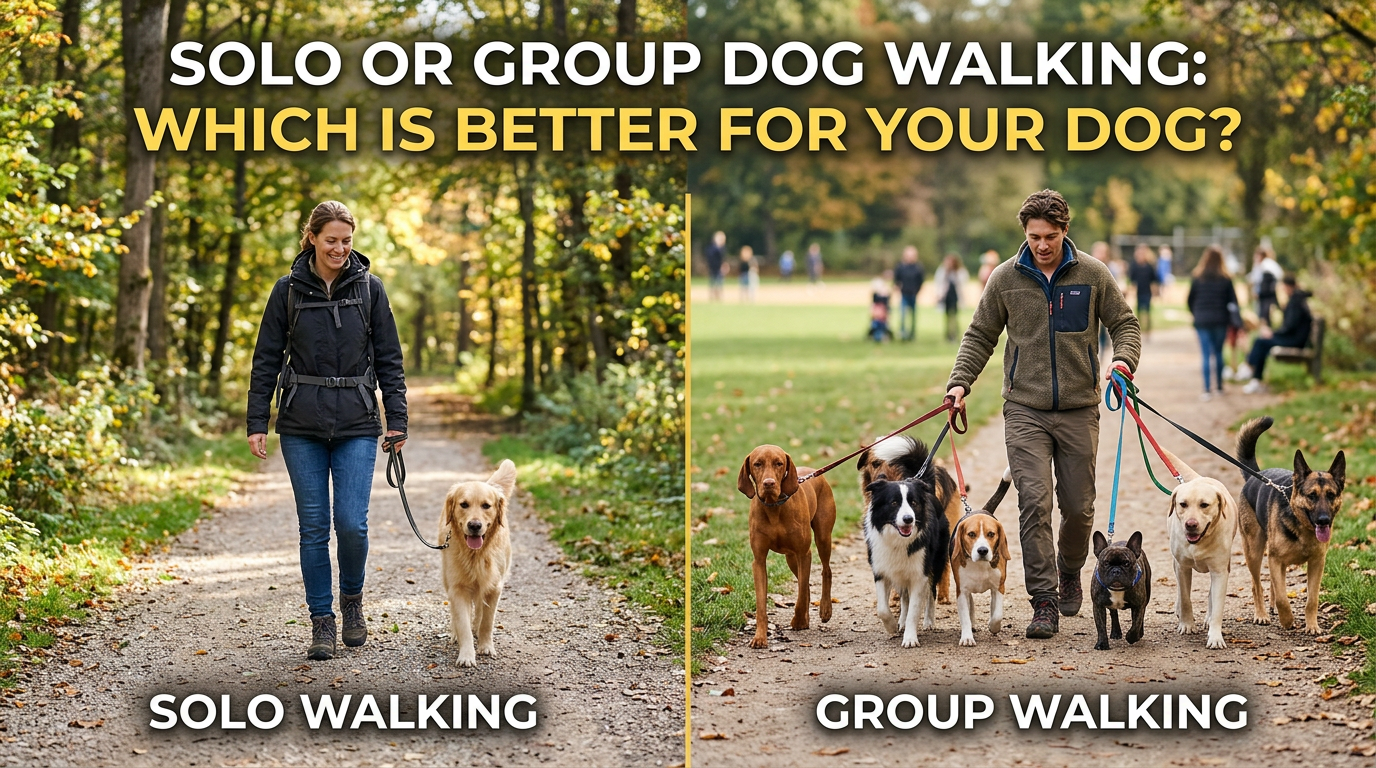
Your dog needs a walk while you're at work. That much is clear. The next decision is less obvious. Should your dog walk alone with a dedicated walker, or join a small pack of other dogs? Both options are common, and both have loyal fans. The best choice depends less on price and more on the dog at the end of the leash.
Professional dog walking comes in two main formats. Solo walks give one dog the walker's full attention. Group walks bring several dogs together on the same outing. Each format has real benefits and real drawbacks, and a dog who thrives in one setting may struggle in the other.
This guide compares solo and group dog walking, looks at which dogs do best in each, and offers questions to help you decide. By the end, you'll have a clearer sense of which option fits your dog's personality, health, and training.
What a solo walk looks like
On a solo walk, the walker takes only your dog. The pace, route, and length of the walk are built around your dog's needs.
Solo walks usually include a bathroom break, exercise, and time to sniff and explore. Many walkers also refill water, give a treat, or handle simple tasks like wiping paws after a muddy walk. The walker can focus completely on your dog's behavior, body language, and safety.
What a group walk looks like
On a group walk, a walker takes several dogs out at once. Group sizes vary, but many walkers keep groups small to stay in control. Dogs in a group usually share similar energy levels and temperaments.
Group walks can offer social time with other dogs and a lively, active outing. The walker manages multiple leashes and keeps an eye on how the dogs interact.
Benefits of solo walks
Solo walks work well for many dogs. Their advantages include:
Full attention
The walker can watch your dog closely, notice changes in behavior, and respond quickly to anything unusual.
A custom pace
Older dogs, small breeds, and dogs with health problems can walk at their own speed. High-energy dogs can go farther or faster.
Safer for reactive dogs
Dogs that react to other dogs, people, or noises need careful handling. A solo walk reduces triggers and gives the walker more control.
Reinforces training
If you're working on leash manners or other skills, a solo walker can use the same commands and techniques you use at home.
Less risk of conflict
Without other dogs nearby, there's less chance of scuffles, competition over toys, or rough play.
Easier to follow special instructions
Dogs with medical needs, special diets, or specific routines get care tailored to them.
Benefits of group walks
Group walks can be a great fit for the right dog. Benefits include:
Social time
Friendly, well-socialized dogs may enjoy spending time with other dogs. Walking in a group can be a fun outing.
More stimulation
New dogs, new smells, and shared activity can make walks more interesting for some dogs.
Energy release
High-energy dogs may enjoy keeping pace with other active dogs.
Lower cost
Group walks often cost less than solo walks, since the walker's time is shared among several dogs.
Drawbacks to consider
Each format has limits. Understanding them helps you choose wisely.
Solo walk drawbacks
Solo walks often cost more because the walker spends that time with only your dog. They also offer less interaction with other dogs, which some social dogs enjoy.
Group walk drawbacks
Group walks bring several risks that matter for certain dogs:
- Less individual attention for each dog
- More chances for conflict between dogs
- Greater risk of spreading illnesses or parasites
- A pace set by the group rather than your dog
- More distractions, which can undo leash training
- Harder to manage dogs that pull, lunge, or bolt
- Possible stress for shy or anxious dogs
Group dog walking depends heavily on the walker's skill and the mix of dogs. A poorly matched group can turn a fun outing into a stressful one.
Which dogs do best on solo walks?
Solo walks are often the better choice for:
Reactive dogs
Dogs that bark, lunge, or become anxious around other dogs need a calm environment.
Puppies
Young puppies are still learning leash manners and may not have completed their vaccinations. Solo dog walking offers a safer, more controlled experience while they build confidence.
Senior dogs
Older dogs may need a slower pace, shorter walks, and more breaks.
Dogs with health issues
Dogs with arthritis, heart conditions, breathing problems, or recent surgeries benefit from customized care.
Dogs in training
If you're working on loose-leash walking or other behaviors, solo walks support consistent training.
Small or fragile dogs
Small dogs can be overwhelmed or accidentally hurt by larger dogs during group play.
Dogs with high prey drive
Dogs that chase squirrels, cats, or other animals may be harder to control in a group.
Which dogs may enjoy group walks?
Group walks can suit dogs that are:
- Friendly and well-socialized with other dogs
- Fully vaccinated and healthy
- Comfortable with new environments
- Well-behaved on a leash
- Similar in size and energy to the other dogs in the group
Even social dogs may need time to adjust to group walks. A trial walk can show how your dog handles the experience.
Safety questions to ask any walker
Whether you choose solo or group dog walking, ask questions to make sure your dog is in good hands:
How many dogs do you walk at once?
Smaller groups are easier to manage safely.
How do you match dogs in a group?
Walkers should consider size, energy, temperament, and play style.
What happens if a dog shows aggression or stress?
Ask how the walker handles conflicts or anxious behavior.
Do you require vaccinations?
Group walks should require up-to-date vaccinations for all dogs.
What equipment do you use?
Ask about leashes, harnesses, and whether dogs are ever off-leash.
How do you handle emergencies?
Walkers should know what to do if a dog is injured, becomes sick, or gets loose.
Do you provide updates?
Many walkers send visit reports with notes and photos after each walk.
Weather and the season
Weather can tip the decision one way or the other. On hot, humid summer days, a group moves at one shared pace, and some dogs overheat faster than others. Flat-faced breeds, heavy-coated dogs, and seniors may need shorter, shadier walks than a group can offer. In winter, icy sidewalks make it harder to manage several leashes at once.
A solo walker can shorten a walk, change the route, or add water breaks based on how your dog is handling the weather. That flexibility matters for dogs with health concerns. If you choose group walks, ask how the walker adjusts for heat, cold, and storms.
Cost and value
Price often drives the first conversation. Group walks usually cost less per visit, while solo walks cost more because one walker spends the full time with one dog. When you compare, think about what the walk needs to accomplish. If your dog needs a calm bathroom break and focused attention, the solo option may deliver more value even at a higher price.
Consider your dog's daily routine
Think about your dog's normal energy level and needs. A young, active dog may need a long, brisk walk. A calm adult dog may be happy with a shorter stroll and some sniffing time. Senior dogs may need multiple short outings rather than one long walk.
Your schedule matters too. Midday walks break up long workdays and give your dog a bathroom break, exercise, and attention. Regular walks at the same time each day help build routine and reduce stress.
Making the decision
There's no universal answer to the solo versus group question. Start with your dog's personality, health, and training. If your dog is reactive, anxious, young, old, or still learning leash manners, solo walks are often the safer choice. If your dog is social, healthy, and well-behaved around other dogs, a small, well-managed group might be a good fit.
Talk with your walker about your dog's needs. A good walker will be honest about which format works best and may suggest a trial walk to see how your dog responds.
Choosing the walk that fits your dog
Solo and group walks both have a place. The best choice is the one that keeps your dog safe, comfortable, and happy. For many dogs, especially those with special needs or reactive behavior, the focused attention of a solo walk makes all the difference.
Paw Pals Pet Sitting offers recurring midday walks across Northern Virginia, Monday through Friday, with visit reports after each outing. Walks can include playtime, feeding, and medication, and every new client starts with a no-obligation meet and greet. To set up regular walks for your dog, contact Paw Pals Pet Sitting.
 Spanish
 English
 Arabic
 French
 Portuguese
 Deutsch
 Turkish
 Dutch
 Italiano
 Russian
 Romaian
 Portuguese (Brazil)
 Greek